
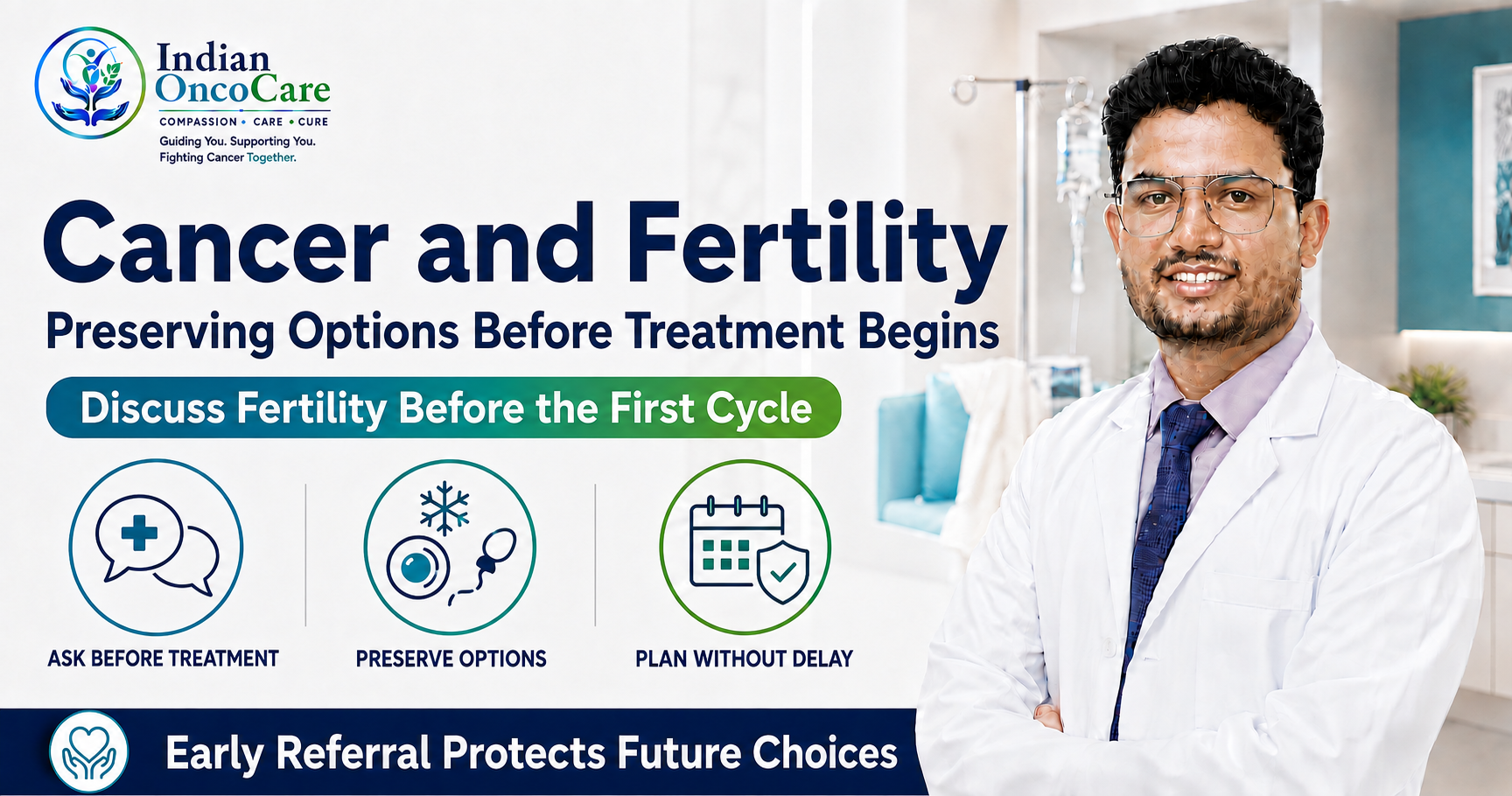
For younger people facing cancer, one question is easy to overlook in the rush to start treatment but hard to reverse later: what will treatment do to my fertility, and can I protect it? The time to ask is before treatment begins.
How cancer treatment can affect fertility
Some cancer treatments — certain chemotherapy drugs, radiation to the pelvis, some surgeries and hormonal therapies — can reduce or end fertility, temporarily or permanently. The effect depends on the treatment, the doses, and your age. Not everyone is affected, but the possibility should be discussed openly at the start.
Options to preserve fertility
Several options exist, and they generally need to be arranged before treatment starts:
- For men: sperm banking (freezing sperm) is simple and effective
- For women: freezing eggs or embryos, and in some cases ovarian tissue
- Protective measures during treatment in selected situations
Which options apply depends on your age, sex, cancer type and how urgently treatment must begin.
Fertility preservation is one of the few decisions in cancer care that usually cannot wait — and cannot be undone later. That is exactly why it belongs in the very first conversation, not a later one.
Balancing urgency and options
Sometimes treatment must start immediately and there is limited time — but often a short, safe window exists to arrange preservation. The key is to raise it early, so it can be weighed against the urgency of treatment. If it was not discussed and you are about to start treatment, it is worth asking now, and a second opinion can help. Our patient support and patient resources pages offer further guidance.
Frequently asked questions
Does cancer treatment always cause infertility?
No — it depends on the treatment, doses and your age. Some people remain fertile.
When should fertility be discussed?
Before treatment starts — most preservation options must be arranged beforehand.
What are the main options?
Sperm banking for men; egg or embryo freezing for women, among others.
What if treatment can’t wait?
Sometimes it must start quickly, but often a short window exists — raising it early lets the team plan.
Related reading: Chemotherapy · Hormonal Therapy · Immunotherapy · Breast Cancer Specialist · Second Opinion for Cancer · Patient Support · Patient Resources
Reviewed by Dr. Harish Kancharla
DM (Medical Oncology), AIIMS, New Delhi · MD (Internal Medicine), PGIMER, Chandigarh
Senior Consultant – Medical Oncology & Hemato-Oncology, Yashoda Hospitals, Somajiguda, Hyderabad
Telangana State Medical Council Registration No. 77186
Last reviewed: August 2026
This article is general information, not personal medical advice. Cancer decisions depend on your individual diagnosis, stage, test results and overall health. Please see our Medical Disclaimer.