

What is hormonal therapy?
Hormonal therapy — also called endocrine therapy — treats cancers that use the body's own hormones as fuel to grow. It works by lowering the amount of that hormone in the body, or by blocking the receptor on the cancer cell that the hormone would otherwise attach to.
This only applies to cancers proven to be hormone-driven. The two situations it is used in almost all the time are hormone receptor-positive (ER/PR-positive) breast cancer and prostate cancer, both of which are confirmed by a specific test before treatment is planned — never assumed from the diagnosis alone.
Hormonal therapy is not chemotherapy and not targeted therapy in the pathway sense, though it shares a common feature with targeted therapy: both depend entirely on a positive test result before treatment begins. Where a cancer is hormone receptor negative, hormonal therapy has no role, and chemotherapy or a targeted approach is used instead.
Testing before treatment
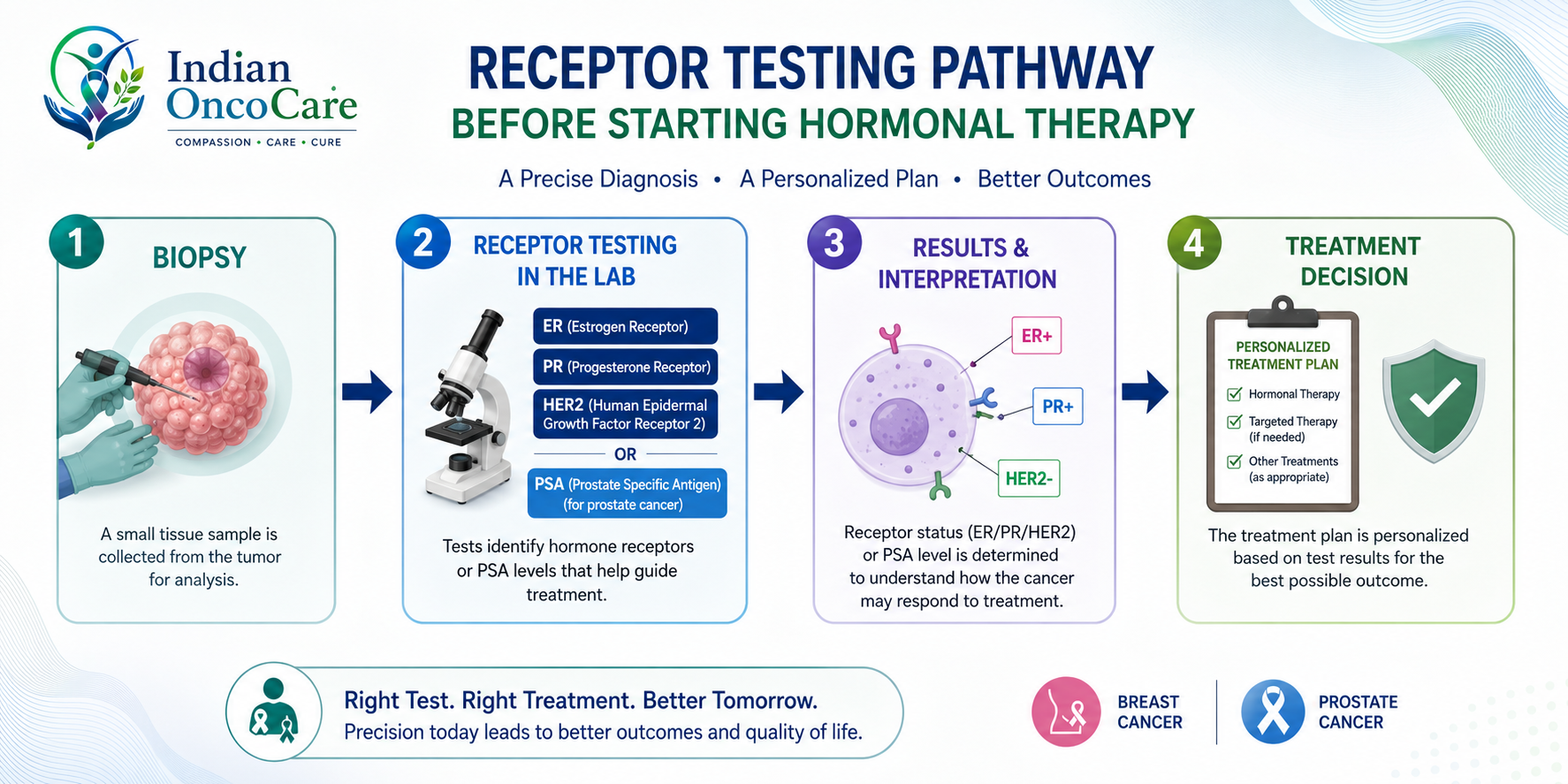
Hormonal therapy is only recommended after your tumour tissue confirms it will respond:
- ER and PR testing (breast cancer) — measures oestrogen and progesterone receptor levels on the biopsy sample, reported as a percentage or score. This is done routinely on every breast cancer diagnosis.
- HER2 testing alongside it — determines whether a targeted HER2 drug should be combined with hormonal therapy.
- PSA and imaging (prostate cancer) — while there is no single "hormone receptor" test in prostate cancer, PSA trends, imaging and sometimes genomic testing guide the decision and timing of hormonal treatment.
- Menopausal status — for women, whether periods have stopped (naturally, surgically or by prior chemotherapy) directly decides which class of hormonal drug is appropriate.
Hormonal therapy in breast cancer
Roughly seven in ten breast cancers are hormone receptor-positive, making this the most frequently used hormonal therapy in oncology.
Tamoxifen blocks the oestrogen receptor directly and is used in both pre- and post-menopausal women, typically for five to ten years.
Aromatase inhibitors — letrozole, anastrozole and exemestane — stop the body producing oestrogen and are used mainly after menopause, since they do not work reliably while the ovaries are still active.
In pre-menopausal women who need an aromatase inhibitor, ovarian function is switched off first — either with monthly injections (ovarian suppression) or, less commonly, surgical removal of the ovaries — so that the drug has no ovarian oestrogen left to compete against.
CDK4/6 inhibitors are frequently added to hormonal therapy in more advanced hormone-positive breast cancer, which is why receptor testing and, where relevant, genomic testing are done together rather than in isolation.
Hormonal therapy in prostate cancer
Prostate cancer growth is driven by testosterone, so hormonal therapy here — called androgen deprivation therapy (ADT) — works by lowering testosterone or blocking its effect.
LHRH agonists and antagonists (monthly or three-monthly injections) reduce testosterone production to near-castrate levels. Anti-androgen tablets block testosterone's effect directly at the cancer cell and are frequently combined with the injections.
Depending on stage, ADT may be used alone, alongside radiotherapy for localised high-risk disease, or combined with chemotherapy or a newer-generation anti-androgen tablet in advanced disease — a combination that has measurably improved outcomes over ADT alone in recent years.
Surgical removal of the testes achieves the same hormonal effect permanently and is still occasionally chosen, though injections have largely replaced it as they are reversible if treatment needs to be paused.
How it is different from chemotherapy, immunotherapy and targeted therapy
By now you may have read about several treatment types, and it helps to see them side by side.
Chemotherapy destroys rapidly dividing cells throughout the body and does not depend on a hormone or biomarker result — read how chemotherapy is planned and delivered on our chemotherapy page.
Immunotherapy releases your own immune system against the tumour and is guided by markers such as PD-L1 rather than hormone receptors — more on that on our immunotherapy page.
Targeted therapy blocks a specific mutated gene or protein the cancer depends on, and is confirmed by mutation testing — explained fully on our targeted therapy page.
Hormonal therapy is closest in spirit to targeted therapy — both require a positive test before starting, and both are commonly taken as a tablet at home over a long period. But hormonal therapy blocks a hormone pathway rather than a mutation, is used almost exclusively in breast and prostate cancer, and generally has a gentler day-to-day side effect profile than either chemotherapy or most targeted drugs.
These treatments are frequently combined, not chosen between. Hormone receptor-positive, HER2-positive breast cancer commonly receives hormonal therapy alongside a targeted HER2 drug; advanced prostate cancer often receives ADT together with chemotherapy or a newer anti-androgen. Which combination applies to you is decided by your receptor status, stage and prior treatment.
Side effects and how they are managed
Hormonal therapy side effects come from hormone suppression itself, not from cell toxicity, so the pattern is different from chemotherapy or immunotherapy.
In women, tamoxifen and aromatase inhibitors commonly cause hot flushes, night sweats, joint stiffness and aches, vaginal dryness, mood changes and irregular bleeding on tamoxifen specifically. Aromatase inhibitors also lower bone density over time, so a baseline bone density (DEXA) scan and periodic monitoring are routine, along with calcium, vitamin D and sometimes a bone-protecting injection. Tamoxifen carries a small increased risk of blood clots and, rarely, uterine changes that need reporting.
In men, ADT commonly causes hot flushes, reduced libido and erectile difficulty, fatigue, loss of muscle mass, weight gain, mood changes and, over time, reduced bone density and a higher risk of cardiovascular events — which is why blood pressure, blood sugar and cardiac risk factors are checked and managed alongside treatment, not as an afterthought.
Most of these effects are manageable rather than dangerous, and many settle or become easier to live with as treatment continues. Regular exercise, particularly weight- bearing exercise, measurably helps both the bone and mood effects in both sexes.
Symptoms that need urgent attention
Do not stop hormonal therapy on your own because of a side effect, even one that feels significant. Call us first — most problems here are manageable with support or a change of drug, and stopping abruptly can undo months of protection against relapse.
Contact the team promptly if you develop:
- Leg swelling, pain or redness, particularly in the calf
- Sudden breathlessness or chest pain
- Vision changes
- Unusual vaginal bleeding, especially after menopause, while on tamoxifen
- Severe bone pain or a fall resulting in a fracture
- Signs of depression or significant mood change that is affecting daily life
- New or worsening urinary symptoms during prostate cancer treatment
How long treatment lasts
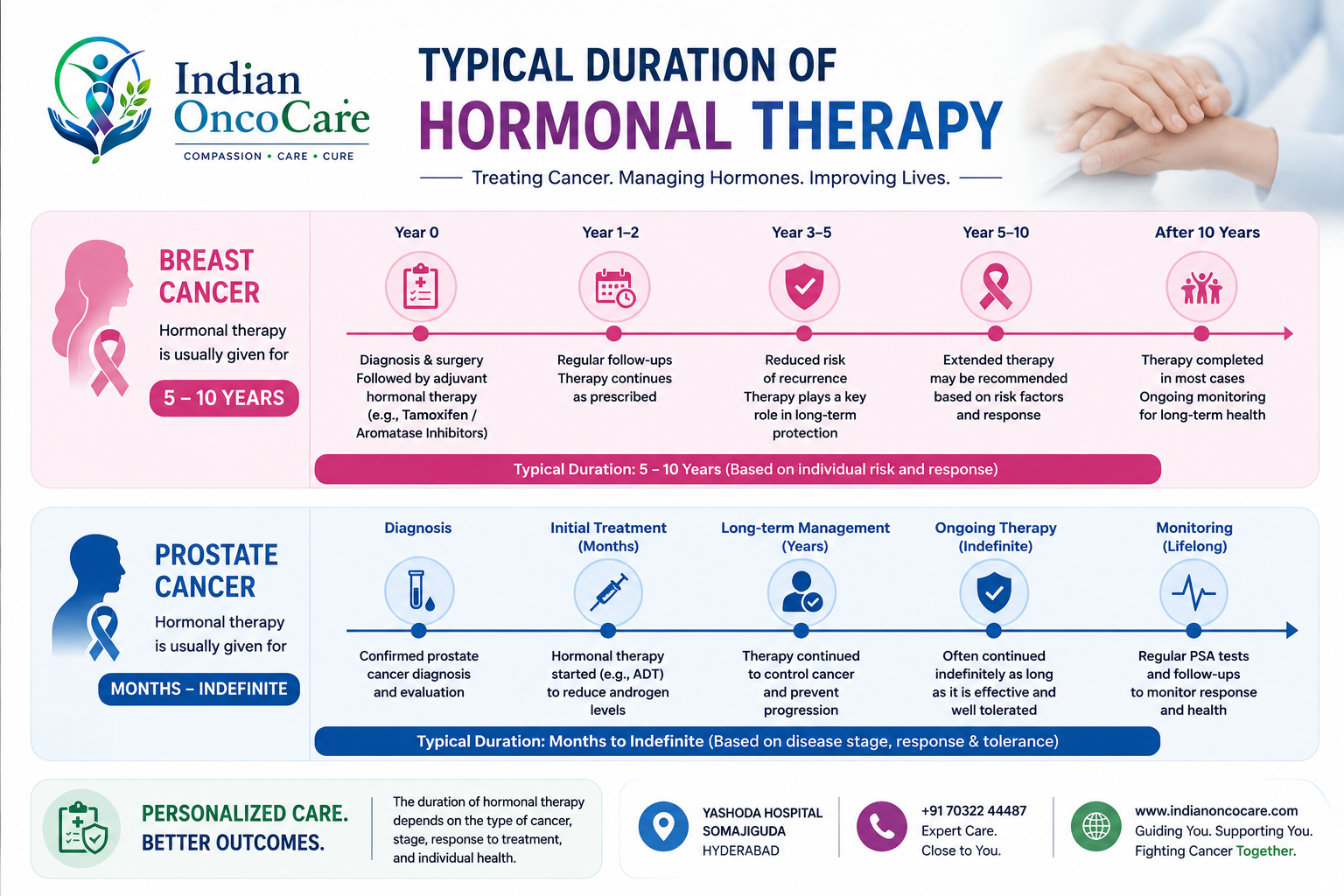
Hormonal therapy is measured in years, not cycles, which is the single biggest adjustment for most patients coming from a chemotherapy mindset.
In breast cancer, standard duration is five years, extended to ten years in selected higher-risk patients based on your specific case. In prostate cancer, ADT duration ranges from a few months alongside radiotherapy in intermediate-risk disease, to two to three years in high-risk localised disease, to indefinite treatment in metastatic disease.
Because the course is long, the plan is reviewed periodically rather than fixed permanently at the start — bone density, cardiovascular risk, quality of life and disease control are all reassessed along the way, and the drug or duration can be adjusted based on how you are tolerating it.
Fertility, family planning and sexual health
Hormonal therapy affects fertility and sexual health directly, and this deserves an honest conversation before treatment starts, not partway through.
Tamoxifen and ovarian suppression can affect fertility, and pregnancy must be avoided during treatment — tamoxifen in particular can harm a developing pregnancy, and reliable non-hormonal contraception is required throughout. If you may want children after treatment, fertility preservation should be discussed before you start, not after.
In men on ADT, effects on libido, erectile function and fertility are common and should be raised openly — practical options exist for most of these, but only if they are discussed.
Cost, access and second opinions
Hormonal therapy is, in relative terms, one of the more affordable long-term cancer treatments. Tamoxifen and generic aromatase inhibitors are widely available in India at low cost; LHRH injections and newer-generation anti-androgen tablets are considerably more expensive, and coverage varies by insurance and scheme.
Because this is a multi-year commitment, getting the receptor testing and initial plan right at the outset matters more than with a short course of treatment. If hormonal therapy has already been recommended elsewhere, a second opinion confirming the receptor result and the specific drug choice is a reasonable and common step — our guide on cancer second opinions in Hyderabad sets out exactly what to send for review.
Patients outside Hyderabad and overseas usually begin with an online consultation and continue treatment, where monitoring visits are needed, in person at Yashoda Hospitals, Somajiguda.
Frequently asked questions
Q1. Is hormonal therapy the same as chemotherapy?
No. Chemotherapy destroys rapidly dividing cells throughout the body and does not depend on a hormone result. Hormonal therapy only works on cancers proven to be hormone receptor-positive and generally has a milder day-to-day side effect profile. See our chemotherapy page for how that treatment is planned.
Q2. Will hormonal therapy put me into menopause?
Aromatase inhibitors and ovarian suppression in pre-menopausal women commonly cause menopausal symptoms, and ovarian suppression can be permanent in some cases, particularly closer to natural menopause age. This is discussed individually before starting.
Q3. How long will I need to take it?
Typically five to ten years for breast cancer, and from a few months to indefinitely for prostate cancer depending on risk group and stage — your specific duration is set out at the planning consultation.
Q4. Can hormonal therapy be combined with targeted therapy?
Yes, commonly. Hormone receptor-positive, HER2-positive breast cancer often receives hormonal therapy alongside a targeted HER2 drug. Read more on our targeted therapy page.
Q5. Is it safe to skip a dose?
Missing an occasional dose of most hormonal tablets is not usually dangerous, but consistent timing matters for effectiveness. Ask what to do about a missed dose at your consultation rather than guessing.
Q6. Does hormonal therapy affect bone health?
Yes, particularly aromatase inhibitors and long-term ADT. A baseline bone density scan and periodic monitoring, along with calcium, vitamin D and weight-bearing exercise, are part of routine care.
Q7. Can hormonal therapy be stopped if side effects are difficult?
It should never be stopped without discussion, but it can often be adjusted — a change of drug, a planned break, or additional supportive treatment usually resolves the problem without losing the benefit of treatment.
Q8. Who will supervise my treatment?
Dr. Harish Kancharla, DM (Medical Oncology, AIIMS Delhi), MD (Internal Medicine, PGIMER Chandigarh), Senior Consultant – Medical Oncology & Hemato-Oncology at Yashoda Hospitals, Somajiguda, plans and reviews hormonal therapy alongside your full treatment course.
Related reading: Chemotherapy · Immunotherapy · Targeted Therapy · Cancer Second Opinion in Hyderabad: What to Send · Bone Health During Cancer Treatment · Patient Support
Further reading:
National Cancer Institute — Hormone Therapy for Breast Cancer , Hormone Therapy for Prostate CancerMedically reviewed by Dr. Harish Kancharla, DM (Medical Oncology- AIIMS , Delhi), MD (Internal Medicine), Senior Consultant – Medical Oncology & Hemato-Oncology, Yashoda Hospitals,
Somajiguda, Hyderabad. Telangana Medical Council Registration No. 77186.
Last reviewed: July 2026.
This page is general information about hormonal therapy and is not a substitute for personal medical advice. Hormonal therapy is only appropriate where receptor testing confirms a hormone-sensitive cancer, and all treatment decisions must be made with a qualified oncologist who has reviewed your reports.