What is chemotherapy?
Chemotherapy uses medicines that travel through the bloodstream to reach and destroy rapidly dividing cancer cells anywhere in the body. Because it works throughout the body rather than at one site, it is used both for solid tumours and for blood cancers such as leukaemia, lymphoma and myeloma.
Modern chemotherapy is very different from what most families expect. Drugs are chosen against your specific diagnosis and stage, doses are calculated for your body and organ function, and supportive medicines are given alongside so that most patients continue with daily life between cycles.
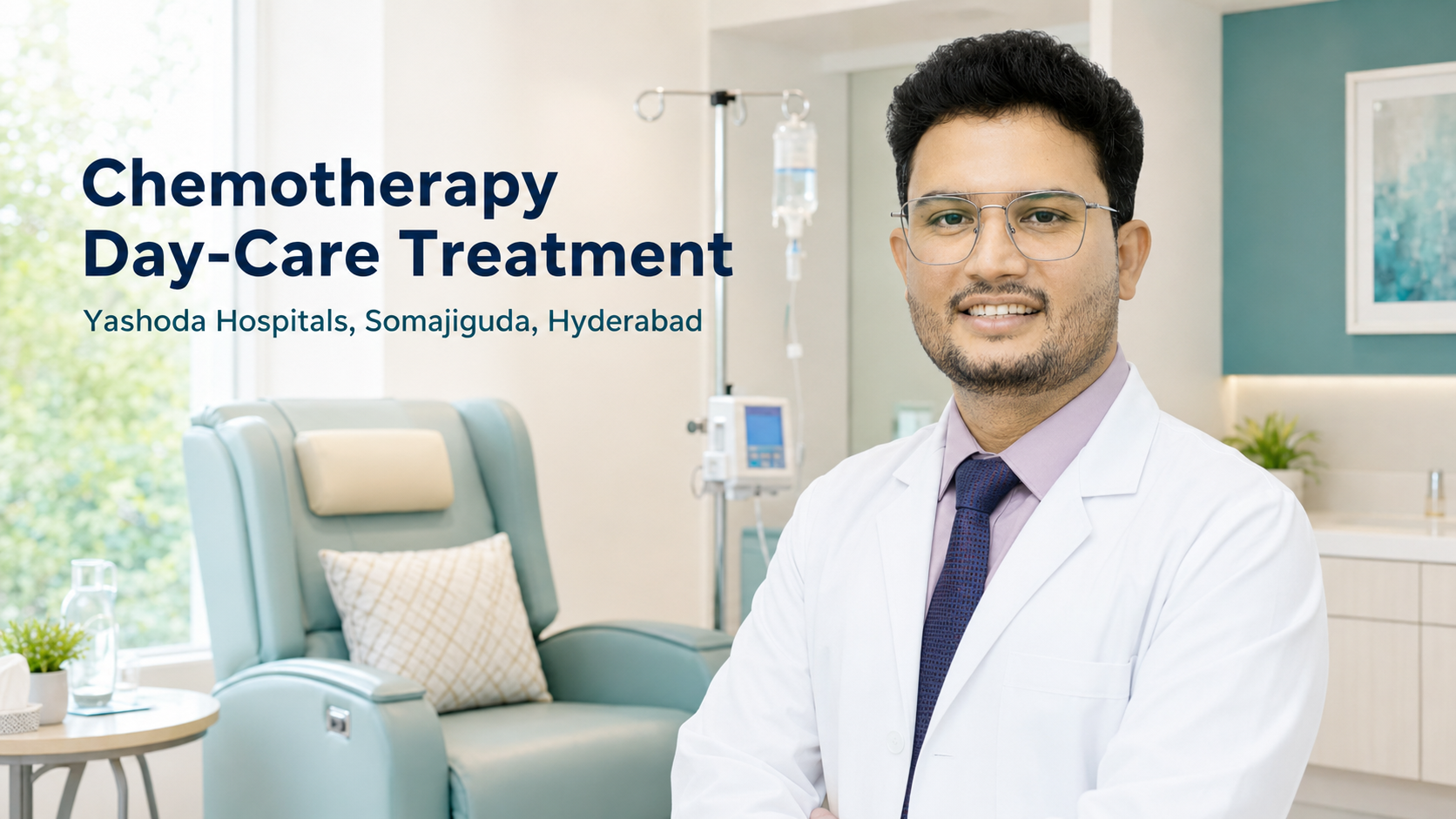
At Indian OncoCare, every chemotherapy plan is prepared and reviewed by Dr. Harish Kancharla, DM (Medical Oncology, AIIMS Delhi), and delivered through the day-care and inpatient facilities at Yashoda Hospitals, Somajiguda.
When chemotherapy is recommended
Chemotherapy is prescribed with a clear intent, and that intent is explained to you before treatment begins:
- Curative (primary) chemotherapy — the main treatment, used where cancers such as several lymphomas, leukaemias and germ cell tumours respond very well to drug therapy alone.
- Adjuvant chemotherapy — given after surgery to clear microscopic disease that scans cannot detect, reducing the chance of the cancer returning.
- Neoadjuvant chemotherapy — given before surgery to shrink a tumour, making the operation smaller, safer or possible at all.
- Chemoradiation — low-dose chemotherapy given alongside radiotherapy to make radiation work better, common in head-and-neck, cervical, oesophageal and rectal cancers.
- Palliative or disease-control chemotherapy — used in advanced cancer to shrink disease, relieve symptoms such as pain or breathlessness, and extend good-quality life.
- Conditioning chemotherapy — high-dose treatment given before a bone marrow transplant.
How chemotherapy is given
Most chemotherapy is given as an intravenous infusion in a day-care unit, taking anywhere from thirty minutes to a few hours, after which you go home the same day.
Some regimens are oral tablets taken at home, and a few are given as an injection under the skin, into the spinal fluid, or into a body cavity.
If your regimen runs over several months, Dr. Kancharla may recommend a chemoport — a small device placed under the skin of the chest that connects to a large vein. A port protects your arm veins, makes each session faster and far less painful, and stays in place for the duration of treatment. A PICC line is an alternative for shorter courses.
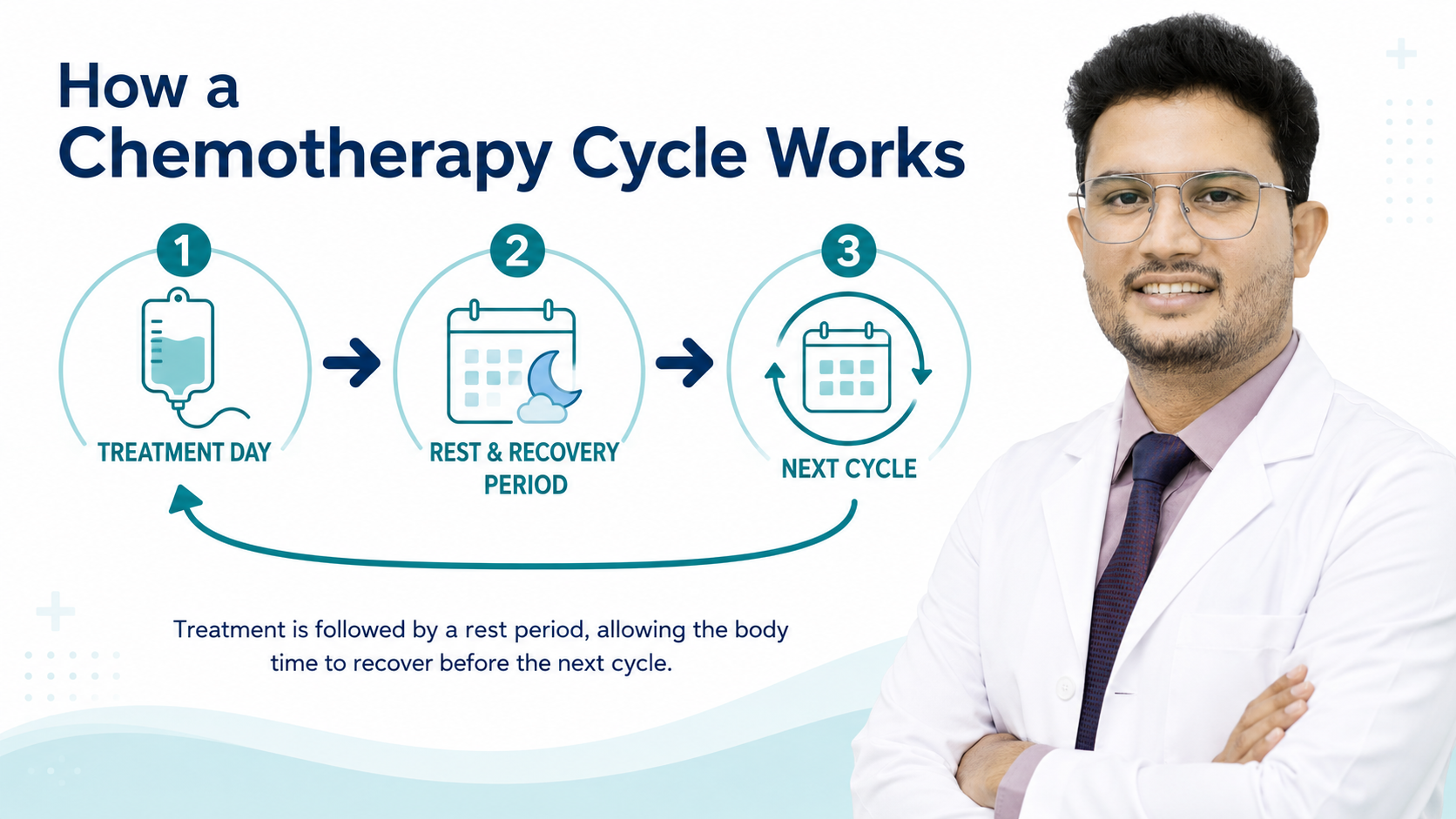
Chemotherapy is given in cycles: a treatment day (or a few consecutive days), followed by a rest gap that lets healthy tissue recover. A cycle is commonly 14, 21 or 28 days, and most protocols run for four to eight cycles — though the exact number depends entirely on your cancer type, stage and response.
How your treatment plan is decided
No two chemotherapy plans are identical. Before the first cycle, the following are reviewed together:
Diagnosis and stage from your biopsy or histopathology report and imaging (CT, PET-CT or MRI). Biomarker and mutation testing, where relevant, since a positive marker may mean targeted therapy or immunotherapy is a better option than chemotherapy alone.
Your general fitness, age, kidney, liver and cardiac function, which decide both drug choice and dose. Any earlier treatment you have received, and how you tolerated it.
Where surgery or radiotherapy also has a role, your case is discussed with the surgical and radiation oncology teams at Yashoda Hospitals so that the sequence of treatment is correct from the start — this ordering often matters as much as the drugs themselves.
What happens on a chemotherapy day
Knowing the routine removes most of the anxiety around the first cycle.
- Blood tests first. Counts, kidney and liver function are checked before every cycle. Treatment is postponed if counts have not recovered — this is routine, not a setback.
- Review with your oncologist. Side effects from the last cycle are discussed and doses adjusted if needed.
- Pre-medication. Anti-nausea medicines, steroids and antihistamines are given first to prevent reactions and vomiting.
- The infusion. You sit in a recliner in the day-care unit. Attendants are allowed; carry water, a light snack, a shawl and something to read.
- Discharge and home instructions. You receive tablets for nausea, a contact number, and a written list of symptoms that need urgent attention.
Side effects and how they are managed
Side effects depend on the drugs used, not on cancer in general, and they are far more controllable today than their reputation suggests. Most are temporary and settle after treatment ends.
Fatigue is the most common and usually builds over the course of treatment. Nausea and vomiting are now well controlled in the large majority of patients with modern anti-emetic protocols. A drop in blood counts is expected around days 7 to 14 of a cycle — this is when the risk of infection is highest, and a growth-factor injection may be prescribed to shorten that window. Hair loss occurs with some drugs and not others, is discussed with you in advance, and regrows after treatment. Mouth ulcers, altered taste, constipation or loose motions, and tingling or numbness in the fingers and toes are also seen with particular drugs.
Effects on fertility should be discussed before the first cycle, not after. If you may want children in future, tell Dr. Kancharla at the planning consultation so that fertility preservation can be arranged in time. Contraception is advised during treatment and for a period afterwards.
Symptoms that need urgent attention
Fever of 100.4°F (38°C) or above during chemotherapy is a medical emergency. Do not wait for morning and do not start antibiotics on your own — call us or reach the hospital immediately.
Contact the team or attend the emergency department without delay if you develop:
- Fever, chills or shivering
- Bleeding, or bruising that appears without injury
- Breathlessness, chest pain or palpitations
- Vomiting or diarrhoea that stops you keeping fluids down
- Mouth ulcers severe enough to prevent eating or drinking
- Redness, swelling, pain or discharge at the chemoport or drip site
- New severe pain, confusion, or reduced urine output
Staying well between cycles
Simple precautions make a measurable difference during the low-count window:
- Wash hands frequently; avoid crowded places and anyone with fever, cough or cold.
- Eat freshly cooked, hot food; avoid raw salads, street food, cut fruit and unpasteurised items.
- Keep well hydrated unless you have been told to restrict fluids.
- Have a dental check-up before starting treatment, not during it.
- Tell your oncologist about every other medicine, herbal product, ayurvedic preparation or supplement you take — several interact directly with chemotherapy drugs.
- Do not take live vaccines during treatment; ask before any vaccination.
- Keep gentle activity going. Short walks reduce fatigue rather than worsening it.
Chemotherapy, targeted therapy and immunotherapy — what is the difference?
Chemotherapy acts on all rapidly dividing cells, which is why it affects hair, the gut lining and bone marrow alongside the tumour. Targeted therapy blocks one specific mutation or protein that a particular cancer depends on, so it is only useful when testing confirms that target is present. Immunotherapy does not attack the cancer directly at all — it removes the brakes on your own immune system so that it can recognise and destroy tumour cells.
These are not competing choices. Many current protocols combine them: chemotherapy with immunotherapy in several lung cancers, or chemotherapy with a targeted antibody in HER2-positive breast cancer. Deciding the right combination is exactly what biomarker testing and a specialist consultation are for. Read more under Precision Oncology — Targeted Therapy and Immunotherapy.
Second opinions and patients travelling to Hyderabad
If chemotherapy has already been advised elsewhere, a second opinion is reasonable and routine — it confirms the diagnosis, the drug protocol and the intent of treatment before you commit to months of therapy. Send your histopathology report, recent scans and blood investigations through the enquiry form or WhatsApp for review.
Patients from outside Hyderabad and from overseas usually begin with an online consultation, then continue treatment in person at Yashoda Hospitals, Somajiguda, with cycles scheduled around travel where possible.

Frequently asked questions
Q1. How many chemotherapy cycles will I need?
Most protocols run four to eight cycles, but the number is set by your cancer type, stage, intent of treatment and response on interim scans. You will be told the planned number before you start, and reviewed at intervals along the way.
Q2. Is chemotherapy painful?
The infusion itself is not painful. A cannula prick or port needle is the only discomfort. Tell the nursing staff at once if you feel burning or stinging at the drip site during an infusion.
Q3. Will I definitely lose my hair?
No. Hair loss depends on the specific drugs in your regimen — some cause complete loss, many cause thinning only, and several cause none at all. Where it does occur, hair regrows after treatment finishes.
Q4. Can I work during chemotherapy?
Many patients do, particularly with desk-based work, planning lighter days around the first week after each cycle. Work that involves crowds, travel or physical strain may need to be reduced during the low-count period.
Q5. Can I take chemotherapy as tablets instead of drips?
Only if an effective oral regimen exists for your cancer. Oral chemotherapy is genuine chemotherapy with the same monitoring requirements — it is a matter of the drug, not of patient preference.
Q6. What does chemotherapy cost in Hyderabad?
Cost depends on the drug protocol, number of cycles, day-care versus admission, and your insurance or scheme coverage. Share your diagnosis with the coordination team and you will be given an indicative estimate before treatment begins.
Q7. Does chemotherapy work for advanced cancer?
Often yes — not always to cure, but to shrink disease, control symptoms and extend good-quality life. The realistic goal for your situation will be explained to you honestly at consultation.
Q8. Who will supervise my treatment?
Dr. Harish Kancharla, DM (Medical Oncology, AIIMS Delhi), MD (Internal Medicine, PGIMER Chandigarh), Senior Consultant – Medical Oncology & Hemato-Oncology at Yashoda Hospitals, Somajiguda, plans and reviews each cycle personally.
Medically reviewed by Dr. Harish Kancharla, DM (Medical Oncology), MD (Internal Medicine), Senior Consultant – Medical Oncology & Hemato-Oncology, Yashoda Hospitals, Somajiguda, Hyderabad. Telangana Medical Council Registration No. 77186. Last reviewed: July 2026. This page is general information about chemotherapy and is not a substitute for personal medical advice. Treatment decisions must be made with a qualified oncologist who has reviewed your reports.