Why African patients travel to India for cancer treatment
Cancer is rising faster in Africa than in any other region of the world. The World Health Organization projects that new cancer cases across sub-Saharan Africa will more than double over the coming decades — the steepest increase of any WHO region — driven by growing and ageing populations, and by infections such as HPV and hepatitis B and C that fuel the continent's high rates of cervical and liver cancer. Breast, prostate, cervical and liver cancers, along with lymphomas, are among the commonest.
Yet the capacity to treat this burden has not kept pace. Many African countries face severe shortages of oncologists, diagnostic equipment, radiotherapy units and essential cancer medicines. In several nations there are only a handful of radiation-therapy centres for tens of millions of people, and a small number of trained specialists carry an enormous workload. The result is delay — long waiting lists, machine breakdowns, and patients travelling many hours to reach a centre — at exactly the moment when timing matters most. These gaps are reflected in survival: five-year survival for many cancers exceeds 80% in high-income countries but often falls below 30% in parts of Africa.
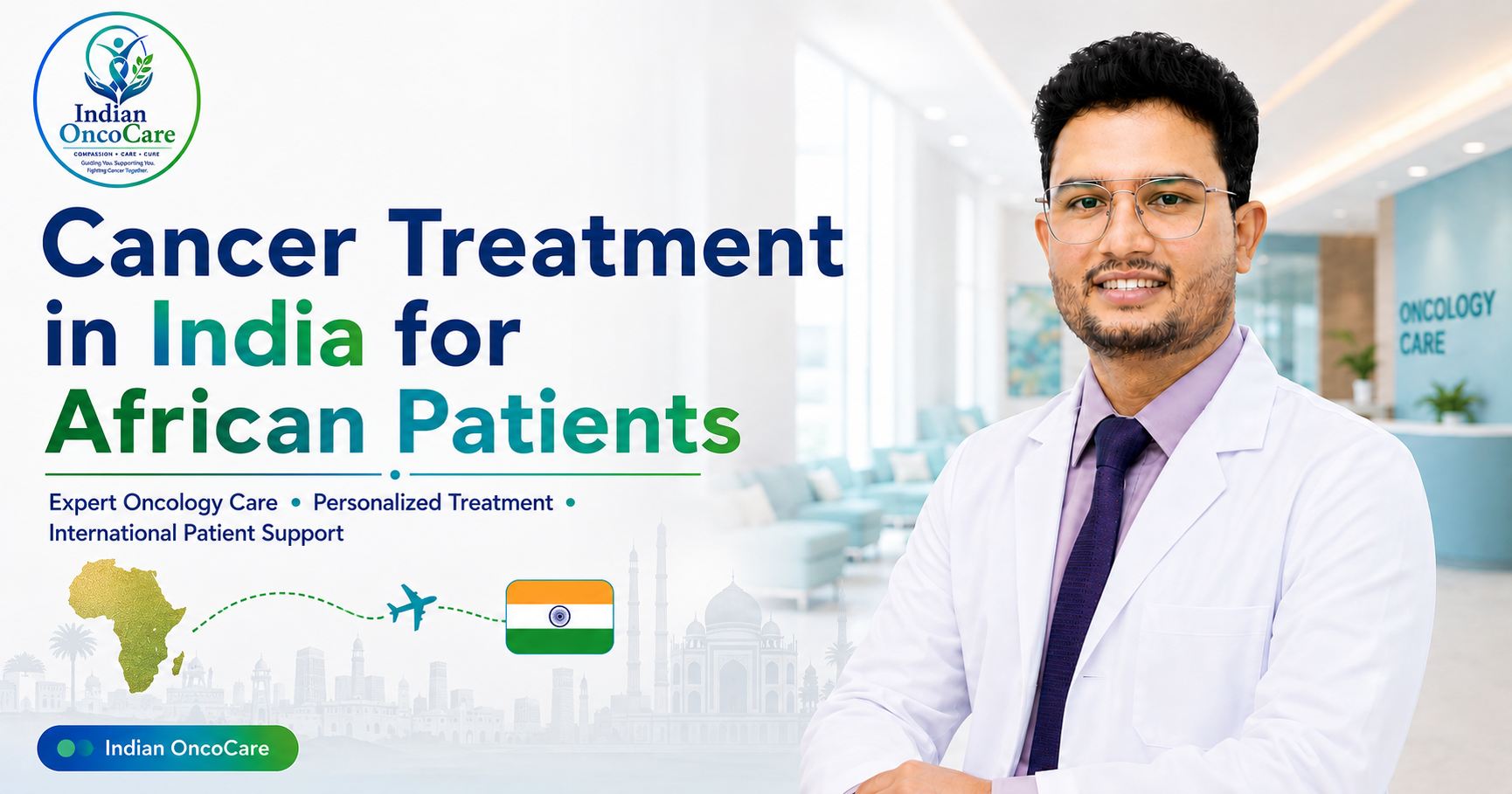
Faced with this, families across the continent increasingly look abroad, and India has become one of the most trusted destinations. The reasons are consistent: immediate access to advanced diagnostics and drug therapy, internationally trained specialists, shorter waiting times, and treatment costs that are typically 60–85% lower than the same care in the UK, USA or the Middle East. For families funding treatment themselves, that difference can decide whether a full course of treatment is completed rather than cut short.
What Indian OncoCare offers international patients
Indian OncoCare is the specialist medical-oncology practice of Dr. Harish Kancharla, delivered through the day-care and inpatient facilities at Yashoda Hospitals, Somajiguda — one of Hyderabad's largest tertiary cancer centres. Medical oncology is the branch of cancer care that treats cancer with medicines, as distinct from surgery and radiation. Your drug treatment is planned and reviewed by one consultant throughout, rather than passed between hands, while surgery and radiation are coordinated with the hospital's surgical and radiation-oncology teams where needed.
The core treatments are all available and matched to your specific diagnosis:
- Chemotherapy — for solid tumours and blood cancers, delivered as day-care chemotherapy wherever possible.
- Immunotherapy — checkpoint inhibitors and antibody therapy, guided by biomarker testing.
- Targeted therapy — mutation-matched tablets and infusions selected from molecular testing.
- Hormonal therapy — for hormone-sensitive breast and prostate cancers.
Treatment choice is driven by your tumour's biology, using precision medicine, molecular oncology and, where tissue is limited, liquid biopsy — the same standard of testing used in leading centres worldwide. This matters especially for African patients, because many arrive with a diagnosis but without the biomarker or mutation testing that decides whether a targeted or immunotherapy option applies.
Cancers we treat for overseas patients
Dr. Kancharla plans and supervises treatment across the common solid tumours and blood cancers, including several that carry a particularly heavy burden across Africa:
- Breast, lung, colorectal, ovarian, stomach, liver, pancreatic and head & neck cancers
- Blood cancers — leukemia, lymphoma and multiple myeloma, including bone marrow (stem cell) transplant
If you are unsure which service applies to you, our cancer services overview and the patient journey explain how care is organised from first enquiry to follow-up.
Start with an online second opinion — often before you travel
For African patients, a great deal can be achieved without leaving home. A second opinion is one of the most common reasons families approach India, and it is best done online first. Dr. Kancharla reviews your reports over video, confirms the diagnosis and stage, checks that biomarker and mutation testing is complete, and advises whether a targeted or immunotherapy option may apply that has not yet been considered. Our guide on what to send for a cancer second opinion sets out exactly which reports, scans and pathology blocks make the review genuinely useful.
An online review has real value even before any decision to travel. It can confirm that a plan advised at home is complete, identify a missing test that changes the treatment, or reassure you that the right path is already being followed. Where treatment does need to be given in Hyderabad, it is planned around your travel, and follow-up can continue online in coordination with your doctor at home.
How treatment works when you start from Africa
The pathway is designed so that the difficult decisions are made before you leave home:
1. Send your reports. Share whatever you have — biopsy/histopathology report, any immunohistochemistry (IHC) or molecular report, recent scans (CT, PET-CT, MRI) and blood tests — through the enquiry form or on WhatsApp. Do not wait until you have everything; send what exists, and the gaps will be identified for you.
2. Online consultation. Dr. Kancharla reviews your file over video, confirms the diagnosis and stage, identifies any missing tests, and explains the realistic goal of treatment honestly.
3. Written plan and estimate. You receive a clear treatment plan and an indicative cost estimate, so you can arrange funds and travel with confidence.
4. Invitation and visa. Once you decide to proceed, the hospital issues the invitation letter you need for your Indian medical visa.
5. Treatment in Hyderabad, follow-up from home. Cycles are scheduled around your travel where possible, and follow-up can continue online after you return home. If your plan involves drug therapy, our guide on what to expect during your first chemotherapy cycle walks through a treatment day step by step.
Indian medical visa for African patients
Most African patients travel to India on an Indian Medical Visa (MED), and citizens of several African countries — including Nigeria, Kenya, Tanzania, Uganda and South Africa, among others — can apply for the e-Medical Visa online, which is usually quicker. Requirements differ by nationality, so always confirm the rules for your own country before applying. Up to two close relatives can accompany you on Medical Attendant visas, with validity linked to the patient's visa.
In practice you will usually need:
- A passport valid for at least six months, with blank pages
- An invitation / appointment letter from the treating hospital in India — we arrange this once your plan is agreed
- A referral or medical report from a doctor in your home country
- Recent passport-size photographs and the completed application
- Any vaccinations required for travel from your country, such as yellow fever, and the polio (OPV/IPV) requirement that applies to travellers from certain nations
Confirm current requirements, fees and eligibility with the Indian High Commission or Embassy in your country and on the official Indian Visa Online portal before applying, as rules can change. Major African cities connect to Indian hubs such as Delhi, Mumbai, Bengaluru, Chennai and Hyderabad, usually with a single stopover.
What cancer treatment costs in India
There is no single price for cancer treatment — it depends on the cancer type, stage, the drugs used, the number of cycles, and whether surgery, radiation or a transplant is involved. What is consistent is that treatment in India costs far less than equivalent care in Europe, North America or the Gulf, while using the same internationally approved drugs and protocols — and Indian-made biosimilars have brought the cost of several modern immunotherapy and targeted drugs down substantially in recent years.
Rather than a headline figure, you receive a personalised estimate after your reports are reviewed. For context, read the cost of cancer treatment in India and, for newer treatments, the cost of immunotherapy, CAR-T and ADCs. Our financial guidance page explains estimates, staged payments and how to plan funding from abroad.
Countries we support
Patients from across the continent are supported through the same online-first pathway, including families from Nigeria, Ghana, Kenya, Tanzania, Uganda, Rwanda, Ethiopia, Zambia, Zimbabwe, Malawi, Botswana, Namibia, Sudan, South Sudan, the Democratic Republic of the Congo, Cameroon and Mauritius, among others. Wherever you are, the process begins the same way — an online review of your reports before any travel is planned.
Patients from Nigeria can also see our dedicated Cancer Treatment in India for Nigerian Patients page for country-specific visa and travel details.
Never delay urgent symptoms — high fever, severe breathlessness, uncontrolled bleeding or new weakness — in order to wait for travel. Get emergency care locally first, then send us your reports. A plan built on a complete, stable picture is always the stronger one.
Support for you and your family
Travelling for cancer treatment is demanding for the whole family, and practical support matters as much as the medicine. Our international patients service helps with report review, estimates and hospital coordination, while our patient support and patient resources sections help you prepare for each stage. Caregivers travelling with you will find our caregiver guide useful, and common questions are answered in our FAQ and on the blog.
Frequently asked questions
Q1. Can African patients really get cancer treatment in India?
Yes — routinely. India is one of the most established destinations for African families seeking cancer care, valued for specialist expertise, quicker access and lower costs. You begin with an online review of your reports, and travel only once a clear plan and estimate are in place.
Q2. Do I have to travel just to get an opinion?
No. Your first consultation is online. Dr. Kancharla reviews your reports over video, so you can understand your options and likely costs from home before deciding whether to fly.
Q3. What is medical oncology?
It is the treatment of cancer with medicines — chemotherapy, immunotherapy, targeted therapy and hormonal therapy — as opposed to surgery or radiation. A medical oncologist plans and supervises this drug treatment.
Q4. How do I get the medical visa?
Most patients apply for an Indian Medical Visa, and citizens of several African countries can apply for the e-Medical Visa online. You will need a referral from a doctor at home and an invitation letter from the treating hospital, which we provide once your plan is agreed. Confirm the exact rules for your country before applying.
Q5. Can a family member travel with me?
Yes. Up to two close relatives can accompany you on Medical Attendant visas, so a caregiver can be with you throughout treatment.
Q6. How much will treatment cost?
There is no single figure — it depends on the cancer, stage and drugs used. Costs are generally far lower than in Europe, the Gulf or North America, and you receive a personalised estimate after your reports are reviewed.
Q7. Which cancers are treated?
The common solid tumours — breast, lung, colorectal, ovarian, stomach, liver, pancreatic and head & neck — and blood cancers such as leukemia, lymphoma and multiple myeloma, including bone marrow transplant. Several of these, including cervical, breast and liver cancer, are especially common across Africa.
Q8. Can my treatment continue after I return home?
Yes. Care is planned to work alongside your local oncologist where possible, and follow-up can continue through online review after you return home.
Q9. What reports should I send first?
Your biopsy/histopathology report, any immunohistochemistry (IHC) or molecular report, recent scans, and blood tests. If you have the pathology paraffin block or slides, these are especially valuable and can avoid a repeat biopsy.
Q10. Who will supervise my treatment?
Dr. Harish Kancharla, DM (Medical Oncology, AIIMS Delhi), MD (Internal Medicine, PGIMER Chandigarh), Senior Consultant – Medical Oncology & Hemato-Oncology at Yashoda Hospitals, Somajiguda, plans and reviews your treatment personally.
Related reading
Related reading: Chemotherapy · Immunotherapy · Targeted Therapy · Hormonal Therapy · International Patients · Cancer Second Opinion in Hyderabad · Your First Chemotherapy Cycle · Cost of Cancer Treatment in India · Patient Support · Blog
Further reading (external)
Further reading: World Health Organization — Cancer · WHO Regional Office for Africa — Cancer · International Agency for Research on Cancer — Global Cancer Observatory · National Cancer Institute — Cancer Treatment · American Cancer Society — About Cancer · Union for International Cancer Control — UICC · Indian Visa Online
Medical review disclaimer
Medically reviewed by Dr. Harish Kancharla, DM (Medical Oncology, AIIMS Delhi), MD (Internal Medicine, PGIMER Chandigarh), Senior Consultant – Medical Oncology & Hemato-Oncology, Yashoda Hospitals, Somajiguda, Hyderabad. Telangana State Medical Council Registration No. 77186.
Last reviewed: August 2026.
This page is general information for international patients about cancer treatment in India and is not a substitute for personal medical advice. Visa and vaccination requirements vary by country and can change — confirm current rules with the Indian High Commission or Embassy in your country before travelling. Treatment decisions must be made with a qualified oncologist who has reviewed your reports.