One of the hardest parts of chemotherapy is not the treatment itself — it is knowing, at home afterwards, which symptoms are a normal part of treatment and which ones mean you should call your oncology team right away. This guide draws a clear line between the two.
It is a companion to our step-by-step guide on what to expect during your first chemotherapy cycle, focused specifically on the days after treatment.
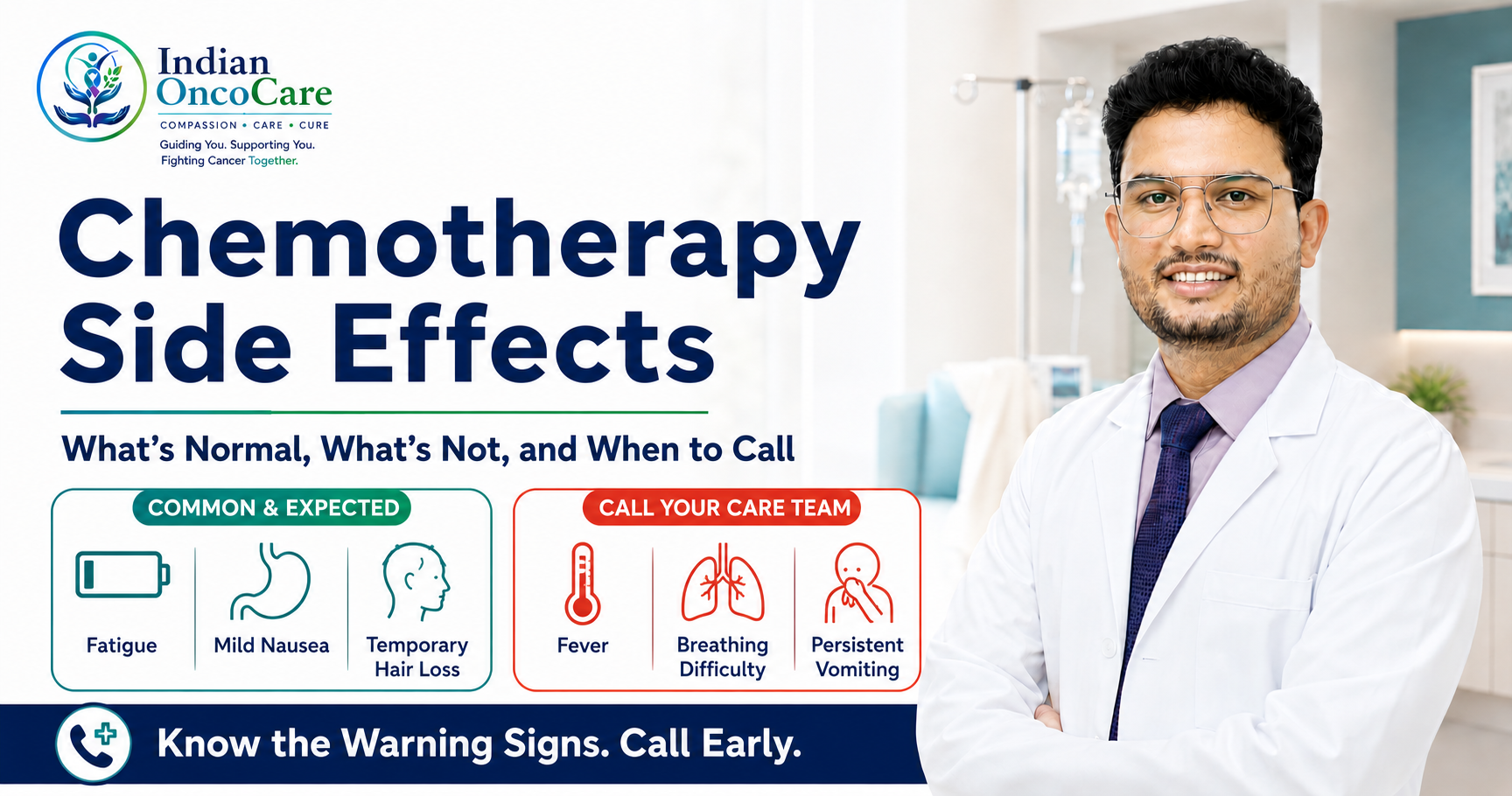
Side effects that are usually normal
These are common, expected, and generally manageable at home with the medicines your team provides:
- Tiredness and low energy for a few days
- Mild nausea controlled by anti-sickness tablets
- Changes in taste, or a metallic taste
- Mild constipation or loose motions
- Mild mouth dryness or soreness
- Hair thinning or loss (with certain regimens), starting days to weeks later
These are unpleasant but not dangerous, and they usually settle before the next cycle.
Symptoms that mean call now
Contact your oncology team — or go to hospital — straight away if you develop any of these:
- Fever at or above the threshold your hospital gave you (often 38°C / 100.4°F), with or without chills. This is the most important one.
- Uncontrolled vomiting or diarrhoea, or being unable to keep fluids down
- Difficulty breathing or chest pain
- Unusual bleeding or widespread bruising
- Severe abdominal pain
- Confusion, fainting or extreme weakness
- Pain, redness, swelling or discharge around an IV site or port
A fever after chemotherapy is not something to sleep off or treat with paracetamol at home. Because chemotherapy can weaken the immune system, fever can be an emergency — call first, always.
The reason fever matters so much is that chemotherapy can temporarily lower your white blood cells, so an infection can become serious quickly. Do not take paracetamol or antibiotics just to mask a fever without speaking to your team first, unless they have specifically told you to.
Simple things that make the after-days easier
Plan a lighter schedule for the first two to three days after each cycle. Take supportive medicines exactly on time rather than waiting for symptoms, keep simple meals and fluids ready, practise gentle hand and mouth hygiene, and keep a short daily note of temperature and symptoms. Much of this is easier because chemotherapy is usually given as day-care chemotherapy, so you recover in your own home — and our patient support resources cover it in more detail.
Frequently asked questions
Is it normal to feel fine right after chemotherapy?
Yes. Some people feel well immediately and notice side effects a few hours or days later. Both patterns are normal.
When is fever an emergency?
Any fever at or above the threshold your hospital gave you, especially with chills, needs an urgent call — do not wait.
Do immunotherapy side effects work the same way?
No — immunotherapy side effects differ from chemotherapy and are managed differently. Tell your team which treatment you are on.
Should I stop treatment if side effects are difficult?
Never stop on your own. Call your team — most problems are managed with support or an adjustment, without losing the benefit of treatment.
Related reading: Chemotherapy · Day Care Chemotherapy · Your First Chemotherapy Cycle · Immunotherapy · Patient Support · Enquiry
Further reading:
National Cancer Institute — Chemotherapy · American Cancer Society — Getting ChemotherapyReviewed by Dr. Harish Kancharla
DM (Medical Oncology), AIIMS, New Delhi · MD (Internal Medicine), PGIMER, Chandigarh
Senior Consultant – Medical Oncology & Hemato-Oncology, Yashoda Hospitals, Somajiguda, Hyderabad
Telangana State Medical Council Registration No. 77186
Last reviewed: August 2026
This article is general information, not personal medical advice. Cancer decisions depend on your individual diagnosis, stage, test results and overall health. Please see our Medical Disclaimer.