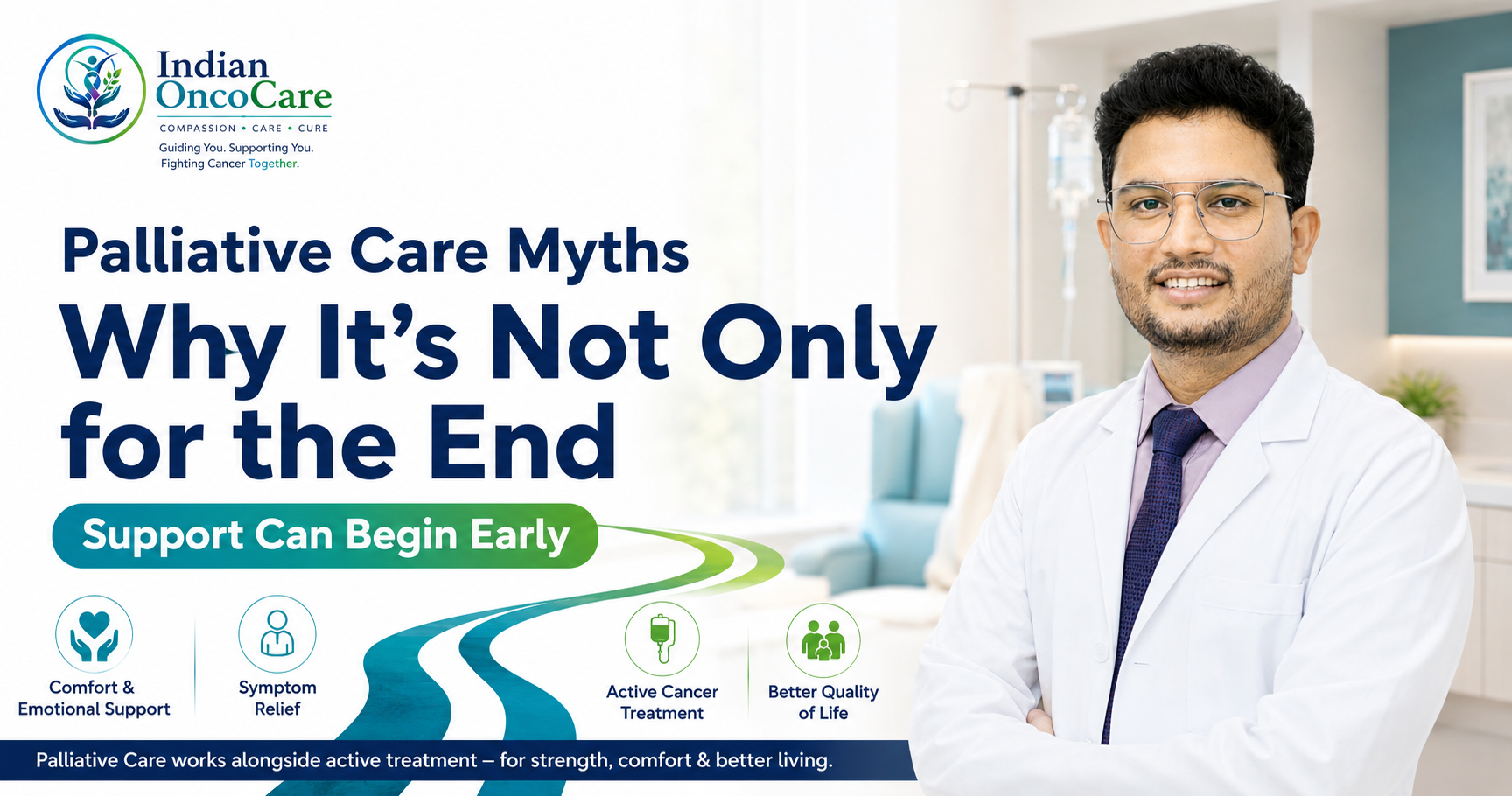
Few phrases are as misunderstood as “palliative care.” Many people hear it and think “giving up” or “the end.” In reality, palliative care is about living as well as possible with a serious illness — and it can start early, alongside treatment aimed at cure. Let us clear up the myths.
Myth 1: Palliative care is only for the end of life
This is the biggest myth. Palliative care is supportive care that focuses on relieving symptoms — pain, nausea, breathlessness, fatigue — and improving quality of life at any stage of a serious illness. It can begin at diagnosis and run alongside chemotherapy, radiation or surgery aimed at cure. It is about comfort and quality of life, not stopping treatment.
Myth 2: Choosing palliative care means giving up
Not at all. Receiving palliative care does not mean abandoning treatment. In fact, evidence suggests that good supportive care alongside cancer treatment can improve quality of life and, in some cases, help people live longer. It works with your treatment, not instead of it.
Myth 3: It’s the same as hospice
Palliative care is a broad approach to symptom relief and support at any stage. Hospice or end-of-life care is one specific part of it, for when treatment to control the cancer is no longer the goal. They overlap but are not the same thing.
Palliative care is not about giving up — it is about living as fully and comfortably as possible, for as long as possible, whatever stage you are at.
What palliative care can do for you
Good supportive care manages pain — as our guide on cancer pain at home explains — and other symptoms, supports emotional wellbeing, helps with difficult decisions, and cares for the family too. It sits comfortably alongside our patient support resources and caregiver guide, and financial questions are covered in our financial guidance. If you have questions about your care, our FAQs and a second opinion can help.
Frequently asked questions
Is palliative care only for dying patients?
No. It is for anyone with a serious illness, at any stage, and can begin at diagnosis alongside active treatment.
Does it mean stopping cancer treatment?
No — it runs alongside treatment aimed at cure or control, focusing on comfort and quality of life.
Is it the same as hospice?
No. Hospice/end-of-life care is one part of the broader palliative approach.
Can it help me live better?
Yes — good supportive care improves quality of life and can help in other ways too.
Related reading: Managing Cancer Pain at Home · Caregiver Guide · Patient Support · Financial Guidance · Second Opinion for Cancer · FAQs
Further reading:
National Cancer Institute — Palliative Care in Cancer · National Cancer Institute — Choices for CareReviewed by Dr. Harish Kancharla
DM (Medical Oncology), AIIMS, New Delhi · MD (Internal Medicine), PGIMER, Chandigarh
Senior Consultant – Medical Oncology & Hemato-Oncology, Yashoda Hospitals, Somajiguda, Hyderabad
Telangana State Medical Council Registration No. 77186
Last reviewed: August 2026
This article is general information, not personal medical advice. Cancer decisions depend on your individual diagnosis, stage, test results and overall health. Please see our Medical Disclaimer.