
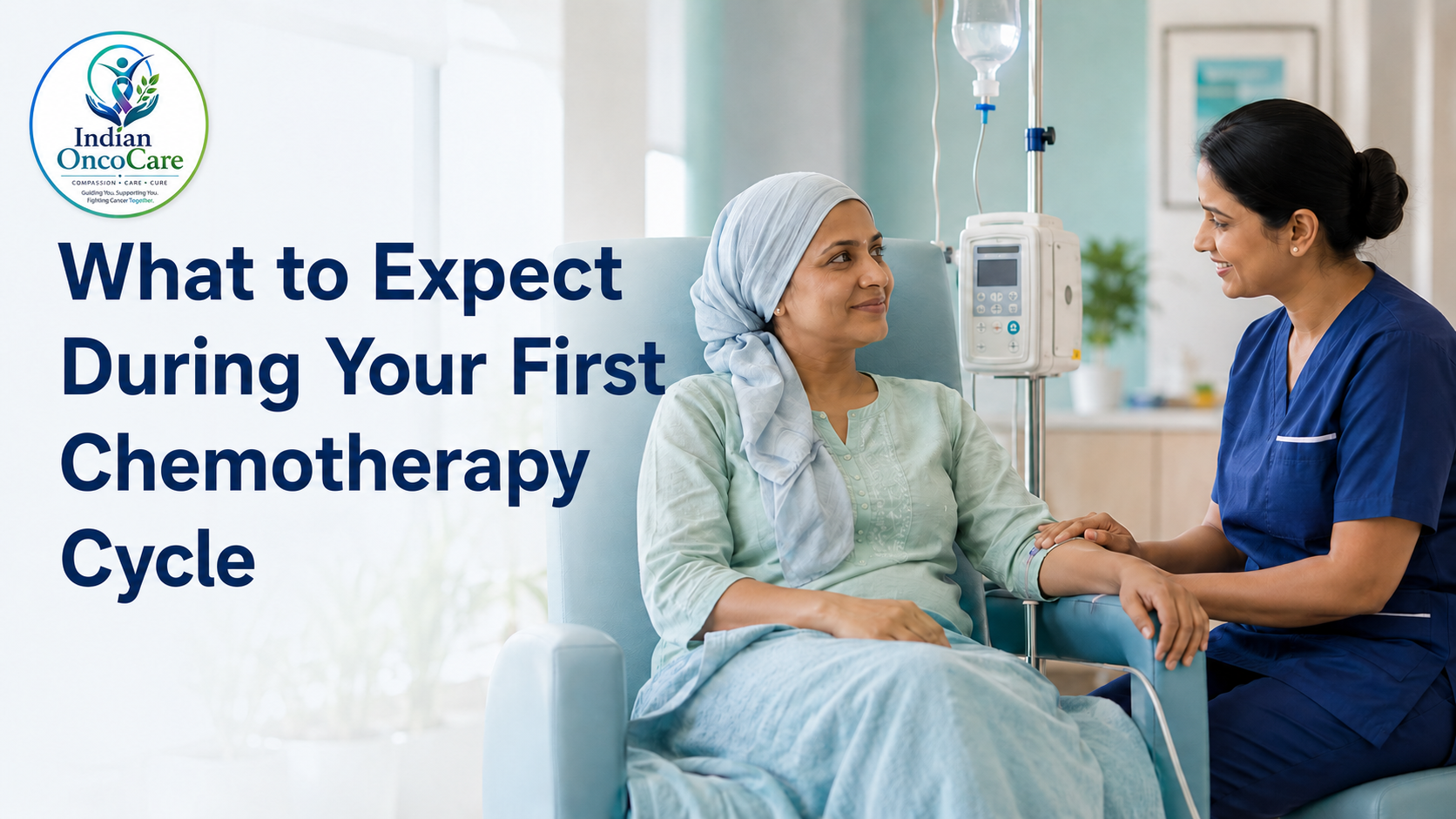
Starting chemotherapy can bring many questions and emotions. You may feel anxious about the procedure, possible side effects and how treatment will affect your daily life. Knowing what to expect during your first chemotherapy cycle can make the experience feel more manageable.
Chemotherapy experiences vary considerably. The medicines used, treatment duration and potential side effects depend on the type and stage of cancer, your general health and your individual treatment plan. Some patients experience only mild symptoms, while others require additional supportive care.
This guide explains what generally happens before, during and after your first chemotherapy session.
What Is a Chemotherapy Cycle?
Chemotherapy uses medicines to destroy cancer cells or prevent them from growing. It may be used:
- Before surgery or radiation to shrink a tumour
- After surgery to destroy remaining cancer cells
- Alongside radiation or other cancer treatments
- To control cancer that has spread
- To reduce symptoms and improve quality of life
Chemotherapy is usually administered in cycles. A cycle includes the treatment period followed by a rest period, allowing healthy cells and the body to recover. The schedule may be weekly, every two weeks, every three weeks or according to another planned interval.
Your oncologist will determine the number and timing of cycles based on your diagnosis and response to treatment.
Preparing for Your First Chemotherapy Cycle
Before chemotherapy begins, you will usually have a consultation with your oncologist. The doctor will explain:
- The names of the chemotherapy medicines
- The goal of treatment
- How the medicines will be administered
- The expected duration and number of cycles
- Common and serious side effects
- Tests required during treatment
- Medicines used to prevent or control side effects
Blood tests are generally performed before treatment to evaluate your blood-cell counts and the functioning of organs such as the liver and kidneys. Your weight, blood pressure, temperature and other vital signs may also be recorded.
Depending on the chemotherapy medicine and your medical condition, additional tests such as an ECG, echocardiogram or imaging may be required.
Tell your oncology team about every medicine, supplement, vitamin and herbal product you take. Some products may interfere with chemotherapy or increase the risk of bleeding and other complications. Do not discontinue prescribed medication without medical advice.
What Should You Bring to Your First Chemotherapy Session?
Chemotherapy infusions may take anywhere from less than an hour to most of the day, depending on the treatment plan. Consider carrying:
- Medical records and identification
- A list of your current medicines
- Water and doctor-approved snacks
- A light sweater or shawl
- A mobile phone, book or headphones
- A notebook for recording instructions
- Any medicines prescribed for the treatment day
Wear loose, comfortable clothing that provides easy access to your arm, port or central line. Ask the hospital in advance whether a family member may accompany you into the infusion area.
Arrange transportation for the first session whenever possible. Some premedications can cause sleepiness, making it unsafe to drive afterward.
What Happens Before the Chemotherapy Infusion?
When you arrive at the chemotherapy centre, the nursing team may check your:
- Temperature
- Blood pressure
- Pulse
- Oxygen level
- Weight
- Blood-test results
The oncologist may postpone or adjust treatment if blood counts are too low or if another health concern makes treatment unsafe that day. A delay does not necessarily mean that chemotherapy has failed. It may simply give the body more time to recover.
Chemotherapy may be administered through:
- A small intravenous line in the hand or arm
- A chemotherapy port
- A central venous catheter
- An injection
- Tablets or capsules taken by mouth
Before the main chemotherapy medicine, you may receive fluids and premedications. These can include medicines to reduce nausea, allergic reactions, acidity or anxiety.
What Does Chemotherapy Feel Like?
Most patients do not feel the chemotherapy medicine actively attacking cancer cells. During an intravenous infusion, you will generally sit in a recliner while the medicine passes slowly through the IV line or port.
A nurse will monitor you for reactions and may check your vital signs at intervals. Tell the nurse immediately if you experience:
- Burning, pain, redness or swelling near the IV site
- Chest tightness
- Difficulty breathing
- Dizziness or sudden weakness
- Chills or flushing
- Itching or a rash
- Throat discomfort
- Unusual pain or pressure
Do not wait for symptoms to become severe. The team can pause the infusion and provide treatment if a reaction occurs.
You can usually read, listen to music, watch something on your phone or rest during the infusion. Some patients become sleepy because of the premedications.
What Happens After the First Chemotherapy Session?
After the infusion, the IV will be removed or the port will be disconnected and secured. The nursing team will explain:
- Which medicines to take at home
- How to manage expected side effects
- Food and fluid recommendations
- Safety precautions after treatment
- When to have the next blood test
- The date of your next cycle
- When and whom to contact in an emergency
Some patients feel relatively normal immediately after chemotherapy. Side effects can develop several hours or days later, depending on the medicines received.
Plan a lighter schedule for the first few days. Having simple meals, adequate drinking water and prescribed supportive medicines ready at home can make recovery easier.
Common Side Effects After the First Chemotherapy Cycle
Not every patient develops every side effect. The type, timing and severity depend on the particular medicines and dosage.
Fatigue
Tiredness is one of the most common effects of chemotherapy. Balance rest with gentle activity, such as short walks, if your doctor permits. Contact the oncology team if fatigue becomes severe or is associated with breathlessness, dizziness or chest discomfort.
Nausea and vomiting
Modern anti-nausea medicines can prevent or control symptoms in many patients. Take them exactly as prescribed, even if you initially feel well. Eat smaller meals and avoid foods or smells that trigger nausea.
Appetite and taste changes
Food may taste metallic, bitter or different. Small, frequent meals can be easier than three large meals. Choose protein-rich and calorie-dense foods recommended by your oncology dietitian.
Mouth problems
Chemotherapy can sometimes cause dryness, sensitivity or mouth ulcers. Use a soft toothbrush and follow the mouth-care instructions provided by your care team. Avoid alcohol-based mouthwash unless your doctor recommends it.
Bowel changes
Constipation or diarrhoea may occur due to chemotherapy, supportive medicines, reduced activity or dietary changes. Contact your team before using laxatives or anti-diarrhoeal medicines.
Hair loss
Not every chemotherapy medicine causes hair loss. When it occurs, it usually begins days or weeks after treatment rather than during the first infusion. Ask your oncologist whether hair loss is expected with your particular regimen.
Reduced blood-cell counts
Chemotherapy can temporarily reduce white blood cells, red blood cells and platelets. This may increase the risks of infection, tiredness, breathlessness, bruising or bleeding. Blood counts are monitored during treatment.
When Should You Contact Your Oncology Team Urgently?
Your hospital should provide specific emergency instructions. Contact the oncology team immediately if you develop:
- Fever at or above the threshold provided by your hospital—often 38°C or 100.4°F
- Chills or shaking
- Difficulty breathing or chest pain
- Uncontrolled vomiting or diarrhoea
- Inability to drink or keep fluids down
- Confusion, fainting or extreme weakness
- Unusual bleeding or widespread bruising
- Severe abdominal pain
- Pain, redness, discharge or swelling around an IV or port
- Very little urine or signs of dehydration
- A sudden rash, facial swelling or allergic symptoms
A fever during chemotherapy can be a medical emergency because the immune system may be weakened. Do not take paracetamol or antibiotics merely to hide a fever without first contacting your oncology team, unless you have previously been given specific instructions.
Practical Tips for the First Few Days
- Take all supportive medicines on schedule.
- Drink fluids according to your doctor’s advice.
- Eat small, freshly prepared meals.
- Wash your hands regularly and avoid close contact with people who are unwell.
- Do not start herbal remedies or supplements without approval.
- Keep a daily record of symptoms, temperature, food intake and medicines.
- Use a soft toothbrush and maintain gentle oral hygiene.
- Avoid alcohol and smoking.
- Ask your doctor before receiving vaccinations or undergoing dental procedures.
- Follow the hospital’s instructions regarding the handling of urine, stool, vomit and other body fluids after chemotherapy.
Does the First Cycle Predict Every Future Cycle?
Not necessarily. The first cycle helps your medical team observe how your body responds to the treatment. Some side effects may be more noticeable in later cycles, while others may become easier to manage after supportive medicines are adjusted.
Tell your oncologist about every symptom, even if it appears minor. Your team may modify anti-nausea medication, hydration, nutrition support or other supportive treatments to make subsequent cycles more comfortable.
Never reduce, delay or stop chemotherapy independently. Any treatment adjustment should be made by your oncologist after evaluating its benefits and risks.
Questions to Ask Before Leaving the Hospital
Before returning home, make sure you know:
- Which side effects are expected with my medicines?
- When are they most likely to begin?
- Which medicines should I take at home?
- What temperature requires an urgent call?
- Whom should I contact outside regular hospital hours?
- Are there any foods, supplements or activities I should avoid?
- When will my blood tests and next chemotherapy cycle occur?
- What precautions should my family follow at home?
A Final Word from Dr. Harish Kancherala
The first chemotherapy cycle often feels intimidating because it is unfamiliar. Preparation, clear communication and timely reporting of symptoms can make the process safer and less stressful.
Every chemotherapy plan is personalised. Advice that is suitable for one patient may not be appropriate for another. Stay in close contact with your oncology team and follow the instructions given for your specific medicines and health condition.
Frequently Asked Questions
Is the first chemotherapy cycle usually the hardest?
Not always. Some patients tolerate the first cycle well, while side effects may become more noticeable during later cycles. Individual responses vary.
Can I eat before chemotherapy?
Many patients can have a light meal before treatment, but instructions depend on the medicines and tests planned. Follow your hospital’s advice.
Can I go home after chemotherapy?
Most chemotherapy is delivered as day care, allowing patients to return home afterward. Certain treatments may require observation or hospital admission.
Can I work after my first chemotherapy session?
Some patients can continue light work, while others need rest. It is wise to keep your schedule flexible until you know how treatment affects you.
Will I lose my hair after the first cycle?
Hair loss depends on the chemotherapy medicine. If it occurs, it generally starts days or weeks after treatment, not immediately during the infusion.
Can family members stay near me after chemotherapy?
Usually, yes. However, chemotherapy medicines can leave the body through fluids for a limited period. Follow your hospital’s hygiene and bathroom-safety instructions.
Medical disclaimer: This article provides general educational information and does not replace consultation, diagnosis or treatment from a qualified oncologist.
The medical content aligns with patient guidance from the National Cancer Institute and American Cancer Society.