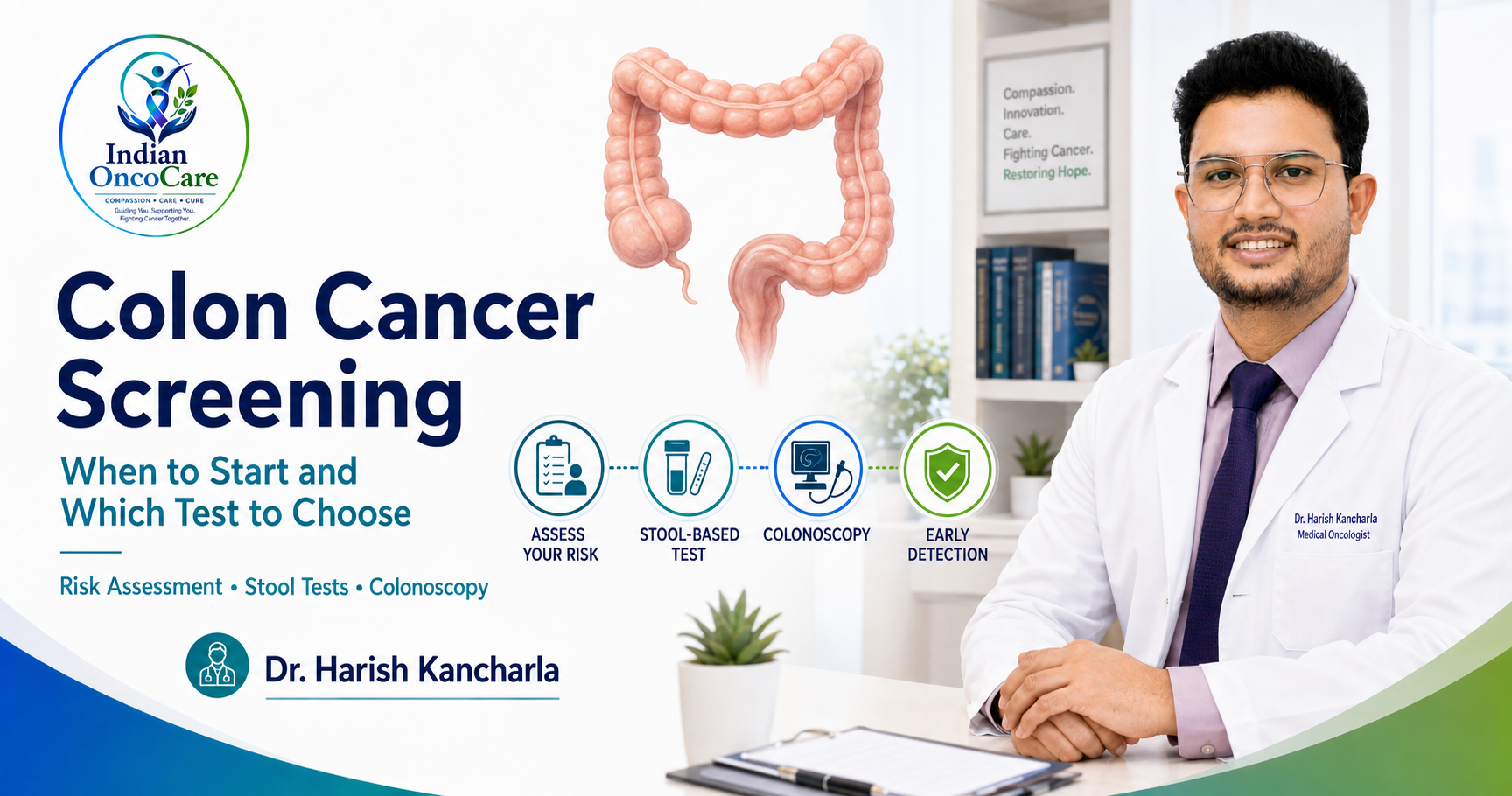
Colon (colorectal) cancer is one of the few cancers that can often be prevented outright — because screening can find and remove precancerous growths before they ever become cancer. Yet screening remains underused in India. This guide explains when to start and which test to choose.
Why screening works so well for colon cancer
Most colorectal cancers develop slowly from small growths called polyps. Screening can find these polyps and remove them before they turn cancerous — and can also catch cancer early, when it is highly curable. Few cancers offer this kind of opportunity.
When to start screening
For people at average risk, screening generally begins around age 45–50 — but earlier if you have risk factors such as a family history of colorectal cancer or polyps, inflammatory bowel disease, or a known inherited syndrome. Anyone with a strong family history should discuss earlier screening and possibly genetic testing. Do not wait for symptoms — screening is for people who feel well.
Which test to choose
The main options, to discuss with your doctor:
- Colonoscopy — the most complete test; it examines the whole colon and can remove polyps in the same sitting. Usually repeated every 10 years if normal.
- Stool-based tests (such as FIT) — simpler and non-invasive, done more frequently; a positive result leads to a colonoscopy.
The best test is the one that gets done. Colonoscopy is the gold standard, especially with risk factors.
Colon cancer screening is one of the rare chances in medicine to prevent a cancer rather than just catch it early. A polyp removed today is a cancer that never happens.
Don’t ignore symptoms between screenings
Screening is for people without symptoms. If you have a change in bowel habits, blood in the stool, unexplained weight loss or persistent abdominal discomfort, see a colorectal cancer specialist promptly regardless of your screening schedule. If cancer is found, treatment may involve surgery, chemotherapy and targeted therapy, guided by biomarker testing. A second opinion is reasonable before starting.
Frequently asked questions
At what age should I start?
Around 45–50 for average risk, earlier with a family history or other risk factors.
Is colonoscopy the only option?
No — stool-based tests are a valid alternative, with colonoscopy if they are positive.
I have no symptoms — do I still need screening?
Yes. Screening is specifically for people who feel well, to catch problems early.
Does family history change things?
Yes — it usually means starting earlier and screening more often.
Related reading: Colorectal Cancer Specialist · Cancer Genetic Testing · Cancer Screening Tests by Age · Chemotherapy · Second Opinion for Cancer · Patient Resources
Further reading:
National Cancer Institute — Colorectal Cancer · National Cancer Institute — Cancer Screening OverviewReviewed by Dr. Harish Kancharla
DM (Medical Oncology), AIIMS, New Delhi · MD (Internal Medicine), PGIMER, Chandigarh
Senior Consultant – Medical Oncology & Hemato-Oncology, Yashoda Hospitals, Somajiguda, Hyderabad
Telangana State Medical Council Registration No. 77186
Last reviewed: August 2026
This article is general information, not personal medical advice. Cancer decisions depend on your individual diagnosis, stage, test results and overall health. Please see our Medical Disclaimer.