“What should I eat during chemotherapy?” is one of the most common questions families ask — and one of the hardest to find good, India-specific answers to. This is a practical Indian diet guide for people undergoing chemotherapy, built around everyday foods you already know.
The goal during treatment is simple: eat enough, keep up protein, stay hydrated, and eat safely. It is not the time for restrictive “anti-cancer” diets or fasting.
The four goals during chemotherapy
- Enough calories — to keep your strength and weight up.
- Enough protein — to repair tissues and maintain muscle.
- Good hydration — water, buttermilk, coconut water, light dal water, nimbu paani.
- Food safety — because chemotherapy can weaken immunity.
Indian foods to focus on
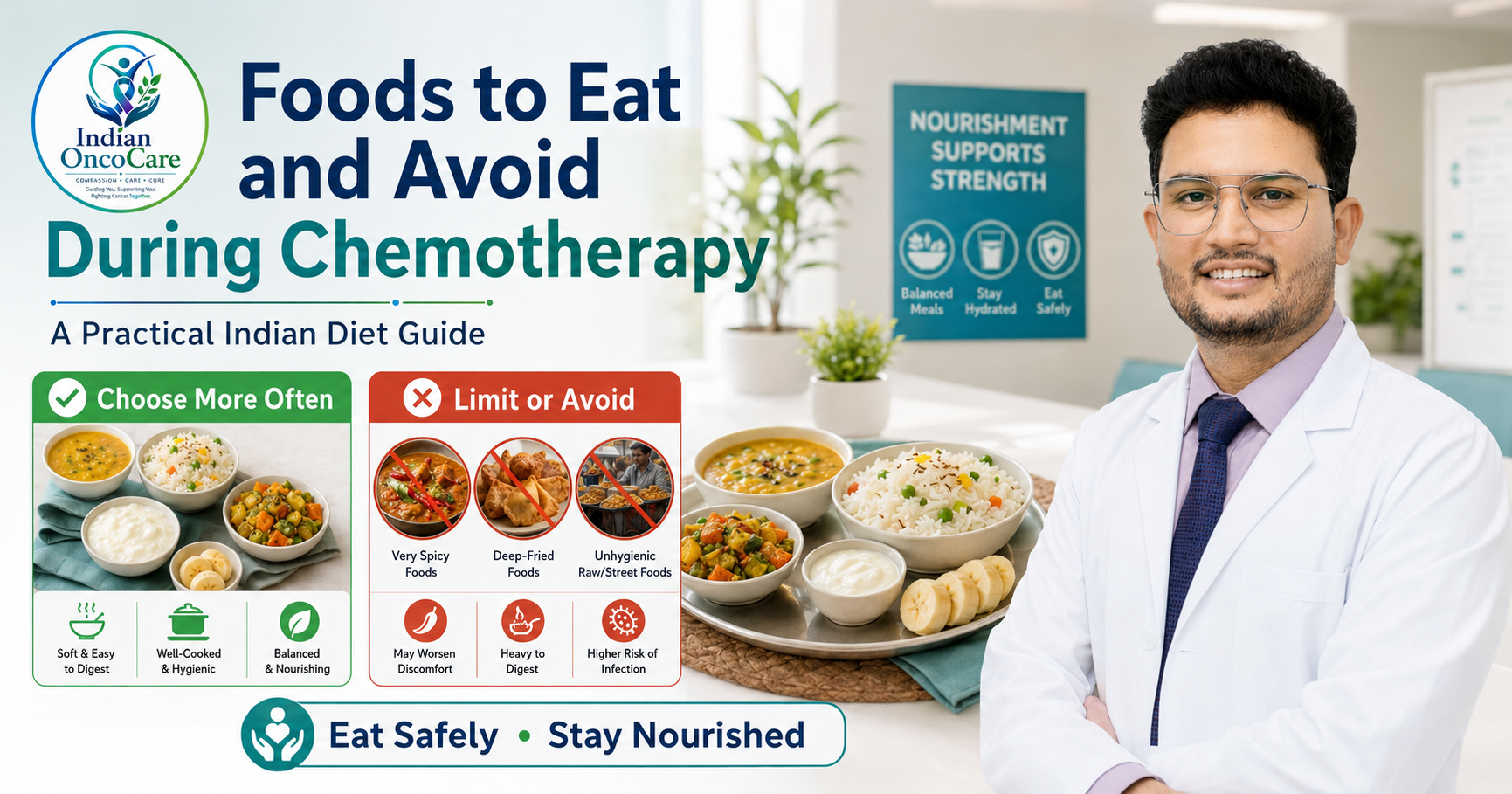
Build meals around familiar, protein-rich, easily digestible foods:
- Protein: dal, rajma, chana, paneer, curd, eggs, well-cooked chicken or fish, sprouts (cooked)
- Energy: rice, roti, khichdi, upma, poha, idli, dalia
- Easy-on-the-stomach: curd rice, moong dal khichdi, vegetable soups, banana, stewed apple
- Hydration: water, buttermilk, coconut water, fresh (pasteurised or home-made) nimbu paani
Small, frequent meals — five or six a day — are usually easier than three large ones, especially when appetite is low.
Foods to avoid or be careful with
Because immunity can dip, food safety matters more than usual:
- Raw or undercooked meat, fish and eggs
- Street food, cut fruit from vendors, and salad bars
- Unpasteurised milk and soft cheeses
- Raw sprouts and unwashed raw vegetables and fruit
- Leftovers kept too long — eat freshly cooked food
- Alcohol, and any herbal supplements not approved by your oncologist
During chemotherapy, freshly cooked home food eaten warm is safer and better than any expensive superfood, powder or fasting plan. Simple, safe and enough beats fancy every time.
Managing common eating problems
Nausea: take anti-sickness medicine as prescribed, eat dry foods like toast or khakhra, avoid strong smells, and eat small amounts often.
Metallic taste: try tart flavours like lemon, use plastic rather than metal spoons, and rinse the mouth before eating.
Mouth sores: choose soft, bland foods, avoid spicy and acidic items, and keep food lukewarm rather than hot.
Constipation or loose motions: adjust fibre and fluids, and tell your team before using any laxative or anti-diarrhoeal.
Frequently asked questions
Should I stop eating sugar or go on a special anti-cancer diet?
No. During treatment, keeping weight and strength up is the priority. Restrictive diets can do more harm than good — discuss any diet plan with your team first.
Is a vegetarian diet enough during chemotherapy?
Yes, with attention to protein — dal, paneer, curd, eggs (if taken), soya and sprouts all help meet protein needs.
Can I take protein powder or supplements?
Some are helpful, but check with your oncologist first, as certain supplements can interfere with treatment.
Where can I get more guidance?
See our patient resources, and read what to expect during your first chemotherapy cycle.
Related reading: Chemotherapy · Day Care Chemotherapy · Your First Chemotherapy Cycle · Patient Support · Patient Resources
Reviewed by Dr. Harish Kancharla
DM (Medical Oncology), AIIMS, New Delhi · MD (Internal Medicine), PGIMER, Chandigarh
Senior Consultant – Medical Oncology & Hemato-Oncology, Yashoda Hospitals, Somajiguda, Hyderabad
Telangana State Medical Council Registration No. 77186
Last reviewed: August 2026
This article is general information, not personal medical advice. Cancer decisions depend on your individual diagnosis, stage, test results and overall health. Please see our Medical Disclaimer.