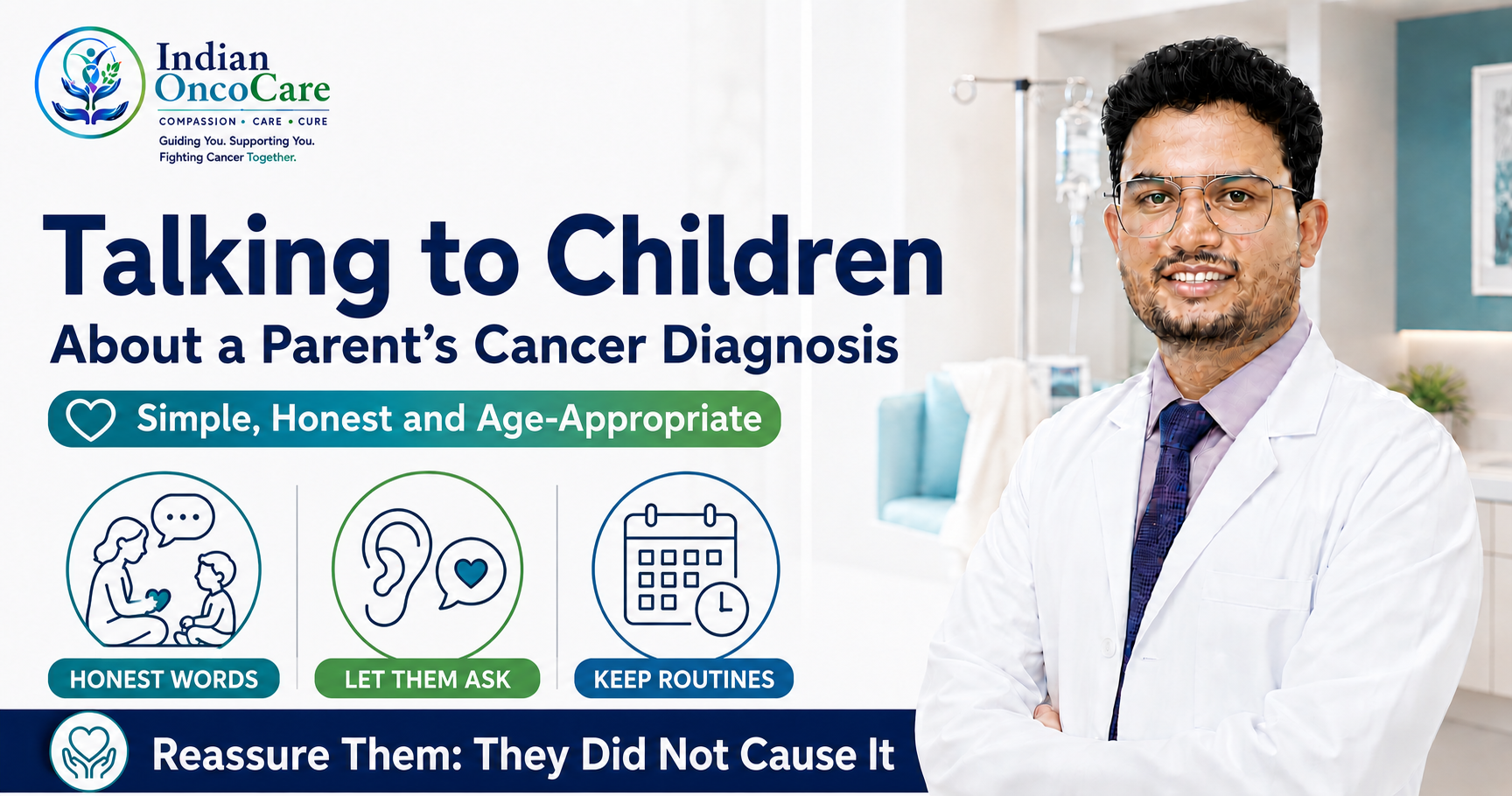
When a parent is diagnosed with cancer, one of the hardest questions is what to tell the children. Instinct says to protect them with silence — but children usually sense when something is wrong, and honest, age-appropriate conversation helps them cope better than being left to imagine the worst.
Why honesty helps
Children are perceptive. Left without explanation, they often fill the gap with fears worse than reality, or assume they are somehow to blame. Simple, truthful information — pitched to their age — helps them feel secure, trust you, and cope. You do not have to explain everything, but what you say should be true.
How to talk to them, by age
Young children need simple words and reassurance: the illness has a name (cancer), it is not their fault, they cannot catch it, and they will be cared for. Older children and teenagers can handle more detail and may want to ask questions or help — let them, and be honest about uncertainty while staying reassuring about the plan.
Children almost always cope better with a hard truth, gently told, than with a silence they can feel but not understand. Honesty, pitched to their age, is a kindness — not a burden.
Keeping life steady
Keep routines as normal as possible, tell their school so teachers can support them, and let trusted relatives help. Watch for changes in behaviour, sleep or school — and seek support if needed. Our guides on the first 30 days after diagnosis and caring for someone on treatment cover the wider family picture, and our patient support and patient resources pages can help.
Frequently asked questions
Should I tell my children at all?
Usually yes, in age-appropriate terms. Children often sense something is wrong, and honesty helps them cope.
What if I break down in front of them?
That is okay. Showing emotion, while reassuring them they are safe and cared for, is human and healthy.
How much detail should I give?
Enough for their age, always truthful. Younger children need simple reassurance; older ones can handle more.
Should I tell their school?
Yes — teachers can offer support and watch for signs the child is struggling.
Related reading: First 30 Days After Diagnosis · Caregiver Guide · Patient Support · Patient Resources · Cancer Second Opinion
Further reading:
National Cancer Institute — Cancer Survivorship & Family · National Cancer Institute — Support for CaregiversReviewed by Dr. Harish Kancharla
DM (Medical Oncology), AIIMS, New Delhi · MD (Internal Medicine), PGIMER, Chandigarh
Senior Consultant – Medical Oncology & Hemato-Oncology, Yashoda Hospitals, Somajiguda, Hyderabad
Telangana State Medical Council Registration No. 77186
Last reviewed: August 2026
This article is general information, not personal medical advice. Cancer decisions depend on your individual diagnosis, stage, test results and overall health. Please see our Medical Disclaimer.