
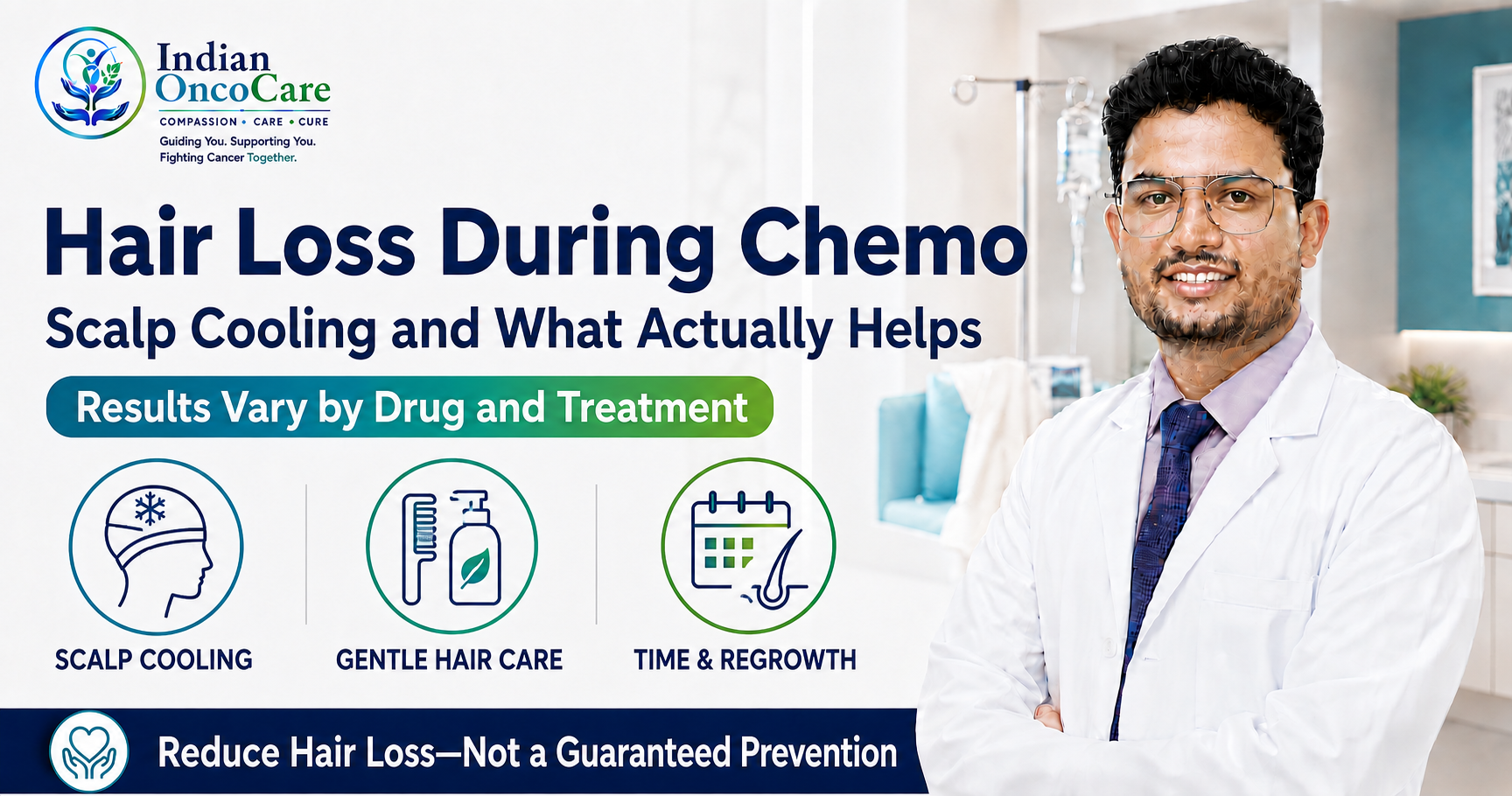
For many people, hair loss is one of the most distressing parts of chemotherapy — not because it is dangerous, but because it is visible. The good news: not all chemotherapy causes it, it is almost always temporary, and there are ways to reduce it. Here is what actually helps.
Not all chemotherapy causes hair loss
Whether you lose your hair depends on the specific chemotherapy drugs you receive — some cause significant hair loss, others little or none. If it happens, it usually begins a couple of weeks after the first cycle, and hair almost always grows back after treatment ends, though sometimes with a change in texture or colour at first. Ask your oncologist whether your particular regimen is likely to cause it.
Scalp cooling: what it is and how well it works
Scalp cooling (a cold cap worn before, during and after infusion) reduces blood flow to the scalp and can lower the amount of hair lost with certain chemotherapy regimens. How well it works varies by the drugs used, and it does not suit every situation. If keeping your hair matters to you, ask your team early whether scalp cooling is available and appropriate for your regimen.
Hair loss from chemotherapy is almost always temporary — and for some regimens, scalp cooling can reduce it. Either way, it is worth discussing before treatment starts, not after.
Practical tips that help
- Consider a short haircut before treatment; some prefer to shave ahead of time
- Use a gentle shampoo and a soft brush; avoid heat styling and harsh chemicals
- Protect your scalp from sun and cold
- Plan ahead for a wig, scarf or cap if you would like one
- Remember eyebrows and lashes may be affected too
Much of this is easier because chemotherapy is usually given as day-care chemotherapy. Our post on chemotherapy side effects and our patient support resources cover the wider picture, and the first cycle is described step by step.
Frequently asked questions
Does all chemotherapy cause hair loss?
No — it depends on the drugs. Some cause a lot, some little or none.
Will my hair grow back?
Almost always, after treatment ends, sometimes with a temporary change in texture or colour.
Does scalp cooling work?
It can reduce hair loss with certain regimens, though results vary. Ask your team if it suits your treatment.
When does hair loss start?
Usually a couple of weeks after the first cycle, if it is going to happen.
Related reading: Chemotherapy · Chemotherapy Side Effects · Day Care Chemotherapy · Your First Chemotherapy Cycle · Patient Support
Further reading:
Centers for Disease Control and Prevention — Side Effects & Scalp Cooling · American Cancer Society — Coping with Hair LossReviewed by Dr. Harish Kancharla
DM (Medical Oncology), AIIMS, New Delhi · MD (Internal Medicine), PGIMER, Chandigarh
Senior Consultant – Medical Oncology & Hemato-Oncology, Yashoda Hospitals, Somajiguda, Hyderabad
Telangana State Medical Council Registration No. 77186
Last reviewed: August 2026
This article is general information, not personal medical advice. Cancer decisions depend on your individual diagnosis, stage, test results and overall health. Please see our Medical Disclaimer.