
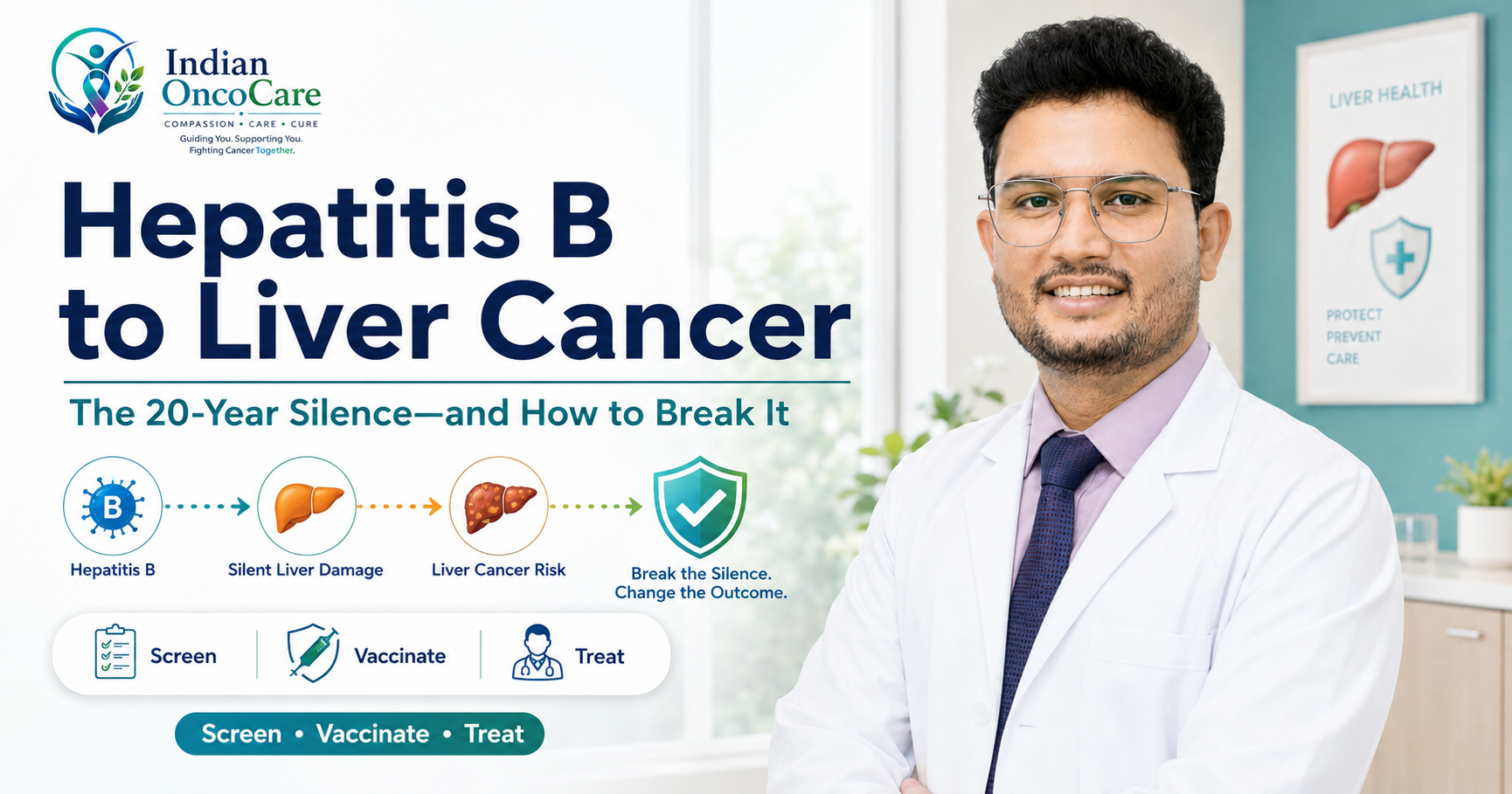
Most people who develop liver cancer from hepatitis B never knew they were at risk. Chronic hepatitis B can sit silently in the body for twenty years or more, slowly damaging the liver, before it announces itself — sometimes as advanced liver cancer.
On World Hepatitis Day, this guide explains the long, quiet link between hepatitis B and liver cancer — and, more importantly, how to break it.
The 20-year silence
Hepatitis B is a viral infection of the liver. In many people it becomes chronic and causes no symptoms for years, while quietly driving inflammation, scarring (cirrhosis) and, in a proportion of people, hepatocellular carcinoma — the commonest type of liver cancer.
Worldwide, chronic hepatitis B and C are the most significant causes of liver cancer. The tragedy is that the virus is detectable with a simple blood test, and the cancer it causes can often be caught early with regular monitoring — yet many people are never tested until symptoms appear.
Who should be tested
Testing for hepatitis B is simple and worthwhile, especially if you:
- Have a family member with hepatitis B or liver cancer
- Were not vaccinated against hepatitis B in childhood
- Have ever had unscreened blood transfusions or unsafe injections
- Have abnormal liver function tests
If you have chronic hepatitis B, you do not necessarily need treatment — but you do need regular monitoring, because that is what catches liver cancer early.
Hepatitis B rarely announces itself. The people who do best are not the ones with symptoms — they are the ones who were tested, monitored, and caught early, long before symptoms ever began.
How to break the chain
The link from hepatitis B to liver cancer can be interrupted at several points:
- Vaccination prevents infection — and the childhood hepatitis B vaccine is one of the most effective cancer-prevention tools that exists.
- Testing identifies those already infected.
- Antiviral treatment, where indicated, lowers the virus and reduces liver damage.
- Six-monthly surveillance (ultrasound and a blood marker) in people with chronic hepatitis B or cirrhosis catches liver cancer at a curable stage.
If liver cancer is found
Caught early, liver cancer is very treatable. Working with a liver cancer specialist team, options include surgery or transplant, local treatments such as ablation and trans-arterial therapy delivered by interventional radiology, and — for more advanced disease — targeted therapy and immunotherapy, now often combined. Because treatment depends heavily on how well the liver is working, planning by an experienced team matters.
If liver cancer has been diagnosed or suspected elsewhere, a second opinion confirming the diagnosis and plan is a reasonable step.
Frequently asked questions
Can hepatitis B really cause cancer without symptoms?
Yes. Chronic hepatitis B can damage the liver silently for years before cancer develops, which is exactly why testing and monitoring matter.
I was vaccinated as a child — am I protected?
The hepatitis B vaccine is highly effective at preventing infection. If you are unsure of your status, a simple blood test can check.
If I have hepatitis B, will I definitely get liver cancer?
No. Most people with chronic hepatitis B do not develop liver cancer, and monitoring plus treatment where needed lowers the risk further.
Can liver cancer be cured?
Early-stage liver cancer can be cured with surgery, transplant or ablation, which is why surveillance to catch it early is so valuable.
Related reading: Liver Cancer Specialist · Targeted Therapy · Immunotherapy · Second Opinion for Cancer · Patient Support · Our Services
Further reading:
National Cancer Institute — Liver Cancer · Centers for Disease Control and Prevention — Hepatitis B BasicsReviewed by Dr. Harish Kancharla
DM (Medical Oncology), AIIMS, New Delhi · MD (Internal Medicine), PGIMER, Chandigarh
Senior Consultant – Medical Oncology & Hemato-Oncology, Yashoda Hospitals, Somajiguda, Hyderabad
Telangana State Medical Council Registration No. 77186
Last reviewed: July 2026
This article is general information, not personal medical advice. Cancer decisions depend on your individual diagnosis, stage, test results and overall health. Please see our Medical Disclaimer.