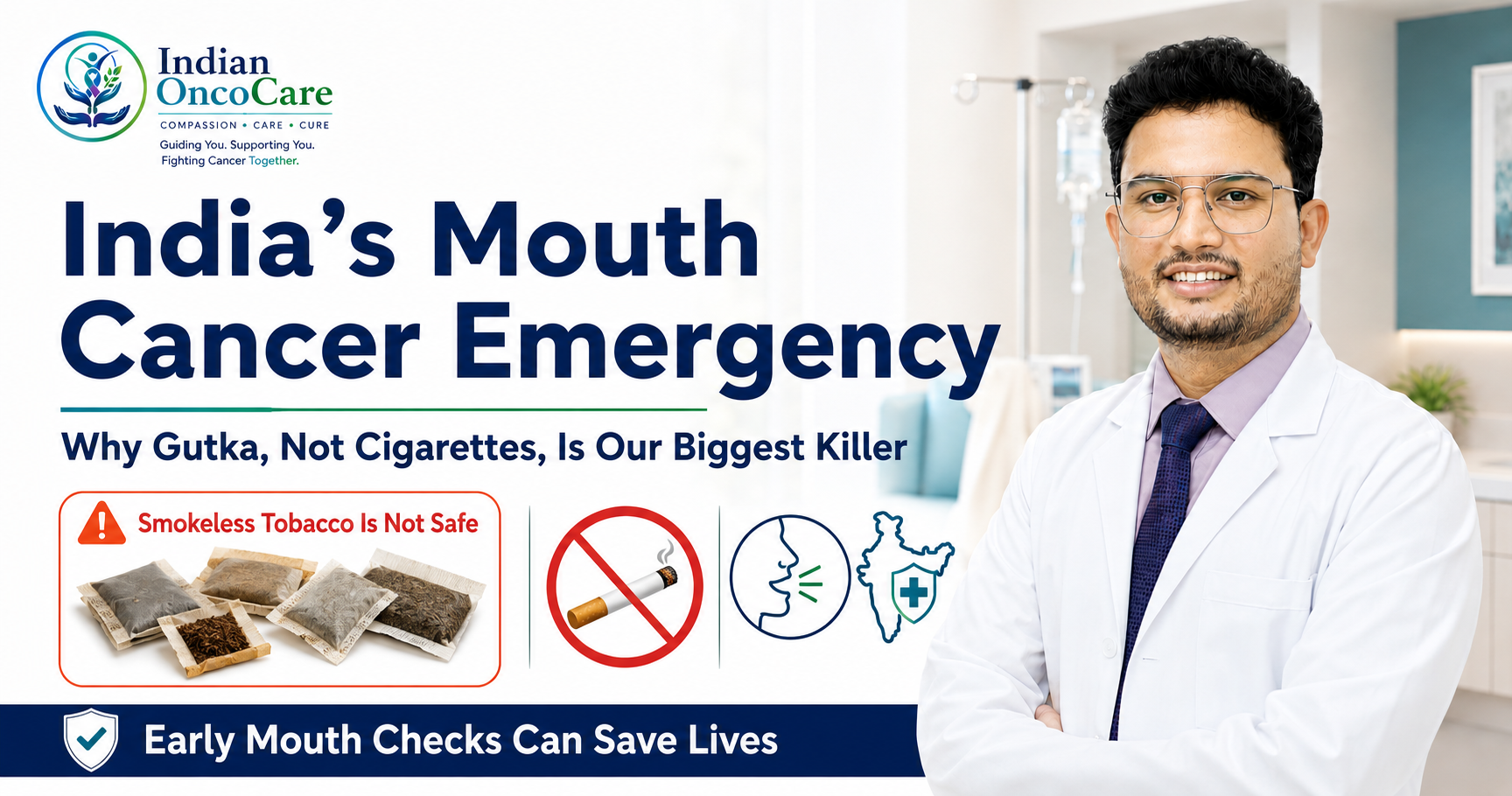
India carries one of the highest burdens of mouth (oral) cancer in the world, and the reason is not cigarettes — it is smokeless tobacco. Gutka, khaini, zarda, paan masala and betel-nut products are the biggest single driver of India’s mouth cancer emergency, and they are used by millions who do not consider themselves “smokers” at all.
On World Head & Neck Cancer Day, this guide explains the symptoms to watch for, why gutka is so dangerous, and how mouth cancer is treated — because caught early, it is highly curable.
Why gutka, not cigarettes, is the bigger killer here
Smokeless tobacco and areca (betel) nut are chewed and held against the cheek or gum for long periods, bathing the mouth lining in carcinogens for hours a day. This causes not only cancer but a precancerous stiffening of the mouth called oral submucous fibrosis — a condition strongly linked to areca nut and widespread in India.
Because these products are cheap, widely sold and socially normalised, use often starts young and continues for decades. The result is mouth cancer appearing in relatively young adults — sometimes in their 30s and 40s.
Warning signs you should never ignore
See a specialist if any of these last more than two to three weeks:
- A mouth ulcer or sore that does not heal
- A white or red patch on the gum, tongue or inner cheek
- A lump or thickening anywhere in the mouth
- Progressive difficulty opening the mouth fully (a red flag for submucous fibrosis)
- Persistent mouth pain, a lump in the neck, or loose teeth without a dental cause
A non-healing ulcer in someone who uses gutka is mouth cancer until proven otherwise, and must be biopsied.
A mouth ulcer that has not healed in three weeks in a gutka user is not a small thing to ‘wait and watch.’ It is the single most treatable stage of a very treatable cancer — if it is checked now.
How mouth cancer is diagnosed and treated
Diagnosis involves examination of the mouth and throat, a biopsy of the suspicious area, and imaging (CT, MRI or PET-CT) to map the extent and the neck nodes. Treatment, coordinated by a head and neck cancer specialist team, combines:
- Surgery — to remove the tumour, with reconstruction to preserve appearance and function.
- Radiation therapy — often part of treatment, alone or with chemotherapy.
- Chemotherapy, and in advanced disease targeted therapy or immunotherapy.
Early-stage mouth cancer is often cured with surgery alone. The single biggest factor in outcome is how early it is caught — which is entirely in the patient’s hands.
The one step that changes everything: stopping tobacco
Quitting gutka and all forms of tobacco and areca nut, at any stage, improves treatment outcomes, lowers the risk of the cancer returning, and reduces the chance of a second cancer developing elsewhere in the mouth or throat. It is never too late, and it is the most powerful single thing a person can do for themselves.
Frequently asked questions
I only chew gutka, I don’t smoke. Am I at risk?
Yes. Smokeless tobacco and areca nut are the leading causes of mouth cancer in India, independent of smoking.
Is difficulty opening my mouth serious?
It can indicate oral submucous fibrosis, a precancerous condition linked to areca nut. It should be assessed rather than ignored.
Is mouth cancer curable?
Yes, and highly so when caught early — which is why acting on a non-healing ulcer or patch quickly matters so much.
Who should I see?
A head and neck cancer team. Learn more on our head and neck cancer specialist page, or send reports for a second opinion.
Related reading: Head & Neck Cancer Specialist · Chemotherapy · Targeted Therapy · Immunotherapy · Second Opinion for Cancer · Patient Support · Our Services
Reviewed by Dr. Harish Kancharla
DM (Medical Oncology), AIIMS, New Delhi · MD (Internal Medicine), PGIMER, Chandigarh
Senior Consultant – Medical Oncology & Hemato-Oncology, Yashoda Hospitals, Somajiguda, Hyderabad
Telangana State Medical Council Registration No. 77186
Last reviewed: July 2026
This article is general information, not personal medical advice. Cancer decisions depend on your individual diagnosis, stage, test results and overall health. Please see our Medical Disclaimer.