
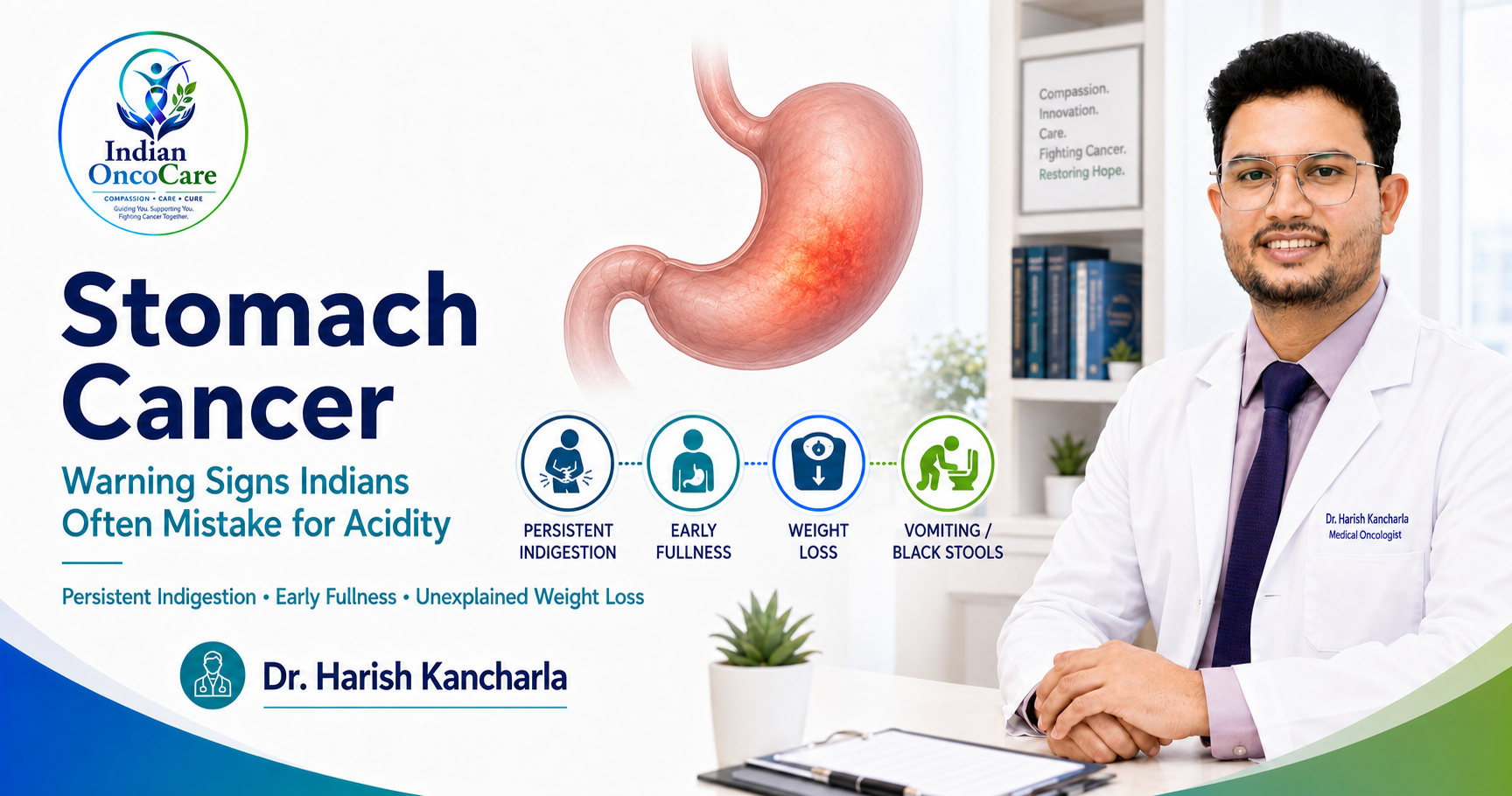
Persistent “acidity” is one of the commonest complaints in India — and almost always harmless. But occasionally, symptoms that look exactly like ordinary acidity are the first sign of stomach (gastric) cancer. Knowing the difference, and when to investigate, matters.
When acidity is probably just acidity
Ordinary acidity and reflux are extremely common, usually linked to food, stress or lifestyle, respond to simple treatment, and come and go. Short-lived symptoms that settle with antacids and diet changes are rarely a cause for alarm.
Warning signs that need investigation
See a specialist — and ask about an endoscopy — if you have persistent:
- Indigestion or upper-abdominal discomfort that does not settle with usual treatment
- Feeling full quickly, or loss of appetite
- Unintended weight loss
- Nausea or vomiting, especially with blood
- Black, tarry stools or unexplained anaemia
- Difficulty swallowing
The red flags are symptoms that are new in someone over 40–45, persistent, worsening, or accompanied by weight loss or anaemia.
Acidity that does not behave like acidity — that is new, persistent, or comes with weight loss or anaemia — is the pattern that deserves an endoscopy, not another course of antacids.
How stomach cancer is diagnosed and treated
An upper GI endoscopy with biopsy is the key test; staging uses CT and sometimes PET. Treatment, coordinated by a stomach cancer specialist team, may combine surgery, chemotherapy, and in some cases targeted therapy (for HER2-positive tumours) or immunotherapy. Caught early, stomach cancer is far more treatable — which is why not ignoring persistent symptoms matters. A second opinion is reasonable if a diagnosis has been made.
Frequently asked questions
Does long-standing acidity cause stomach cancer?
Ordinary acidity usually does not, but persistent symptoms, chronic H. pylori infection and certain conditions warrant evaluation.
When should I get an endoscopy?
For new, persistent or worsening upper-abdominal symptoms, especially with weight loss, anaemia or difficulty swallowing.
Is stomach cancer curable?
Early-stage disease is often curable with surgery and chemotherapy; catching it early is key.
Who should I see?
A medical oncologist working with GI surgeons — see our specialist page.
Related reading: Stomach Cancer Specialist · Chemotherapy · Targeted Therapy · Cancer Warning Signs You Should Never Ignore · Second Opinion for Cancer · Patient Support
Reviewed by Dr. Harish Kancharla
DM (Medical Oncology), AIIMS, New Delhi · MD (Internal Medicine), PGIMER, Chandigarh
Senior Consultant – Medical Oncology & Hemato-Oncology, Yashoda Hospitals, Somajiguda, Hyderabad
Telangana State Medical Council Registration No. 77186
Last reviewed: August 2026
This article is general information, not personal medical advice. Cancer decisions depend on your individual diagnosis, stage, test results and overall health. Please see our Medical Disclaimer.