
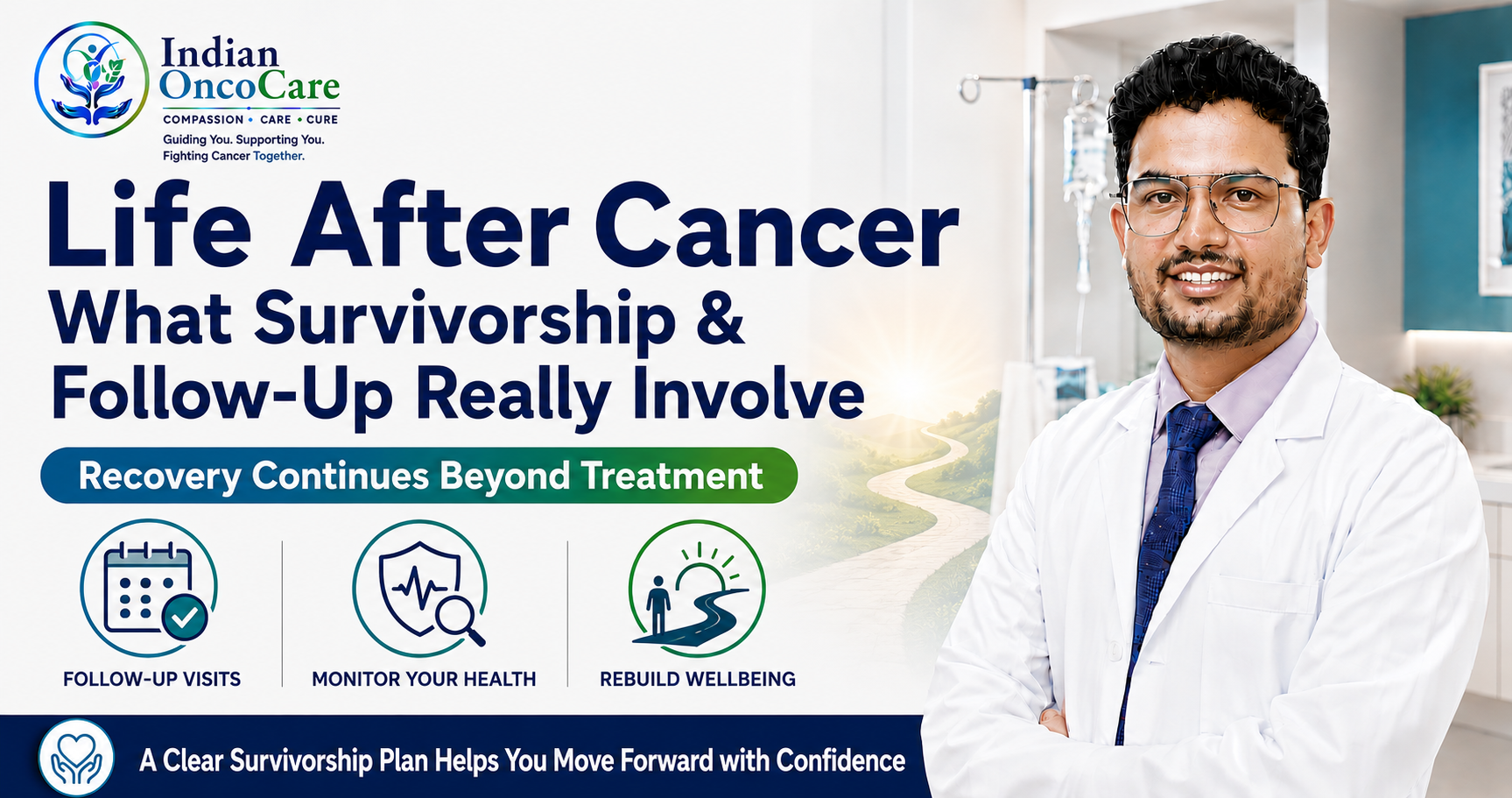
Finishing cancer treatment is a milestone — but it is not always the clean ending people expect. Life after cancer, or survivorship, comes with its own questions: follow-up, late effects, fear of recurrence, and finding a new normal. Here is what survivorship really involves.
Follow-up care
After treatment, regular follow-up continues for years. Its purpose is to watch for any sign of the cancer returning, manage side effects, and support your overall health. Your team will set a schedule of visits and tests — keep to it, and keep a copy of your treatment summary, which future doctors will find invaluable.
Late and long-term effects
Some effects of treatment appear or persist after it ends — fatigue, changes in nerves, bones, heart or fertility, and emotional effects. These are real and manageable; the key is to report them rather than assume you must simply live with them. Good survivorship care actively looks for and treats them.
The emotional side
Fear of recurrence is one of the most common and least discussed parts of survivorship. Anxiety, low mood and a sense of being “in limbo” are normal, and support helps. You do not have to feel grateful and fine all the time.
Survivorship is not simply ‘back to normal.’ It is building a new normal — with follow-up, attention to late effects, and permission to acknowledge the emotional weight of what you have been through.
Getting back to life
Returning to work, relationships and routines takes time, and that is normal — our guide on returning to work after cancer covers this. Our patient support and patient resources pages can help, and financial questions are covered in our financial guidance. If you ever have doubts about your follow-up plan, a second opinion is reasonable. Read more on our blog, and see the overall patient journey.
Frequently asked questions
How long does follow-up continue?
Often for several years, on a schedule your team sets, to watch for recurrence and manage effects.
Is fear of recurrence normal?
Very. It is one of the most common experiences after treatment, and support helps.
Will late side effects appear?
Some effects can appear or persist after treatment; report them so they can be managed.
When can I return to normal life?
Gradually, at your own pace — there is no single timeline.
Related reading: Returning to Work After Cancer · Patient Support · Patient Resources · Financial Guidance · Second Opinion for Cancer · The Patient Journey · Blog
Reviewed by Dr. Harish Kancharla
DM (Medical Oncology), AIIMS, New Delhi · MD (Internal Medicine), PGIMER, Chandigarh
Senior Consultant – Medical Oncology & Hemato-Oncology, Yashoda Hospitals, Somajiguda, Hyderabad
Telangana State Medical Council Registration No. 77186
Last reviewed: August 2026
This article is general information, not personal medical advice. Cancer decisions depend on your individual diagnosis, stage, test results and overall health. Please see our Medical Disclaimer.