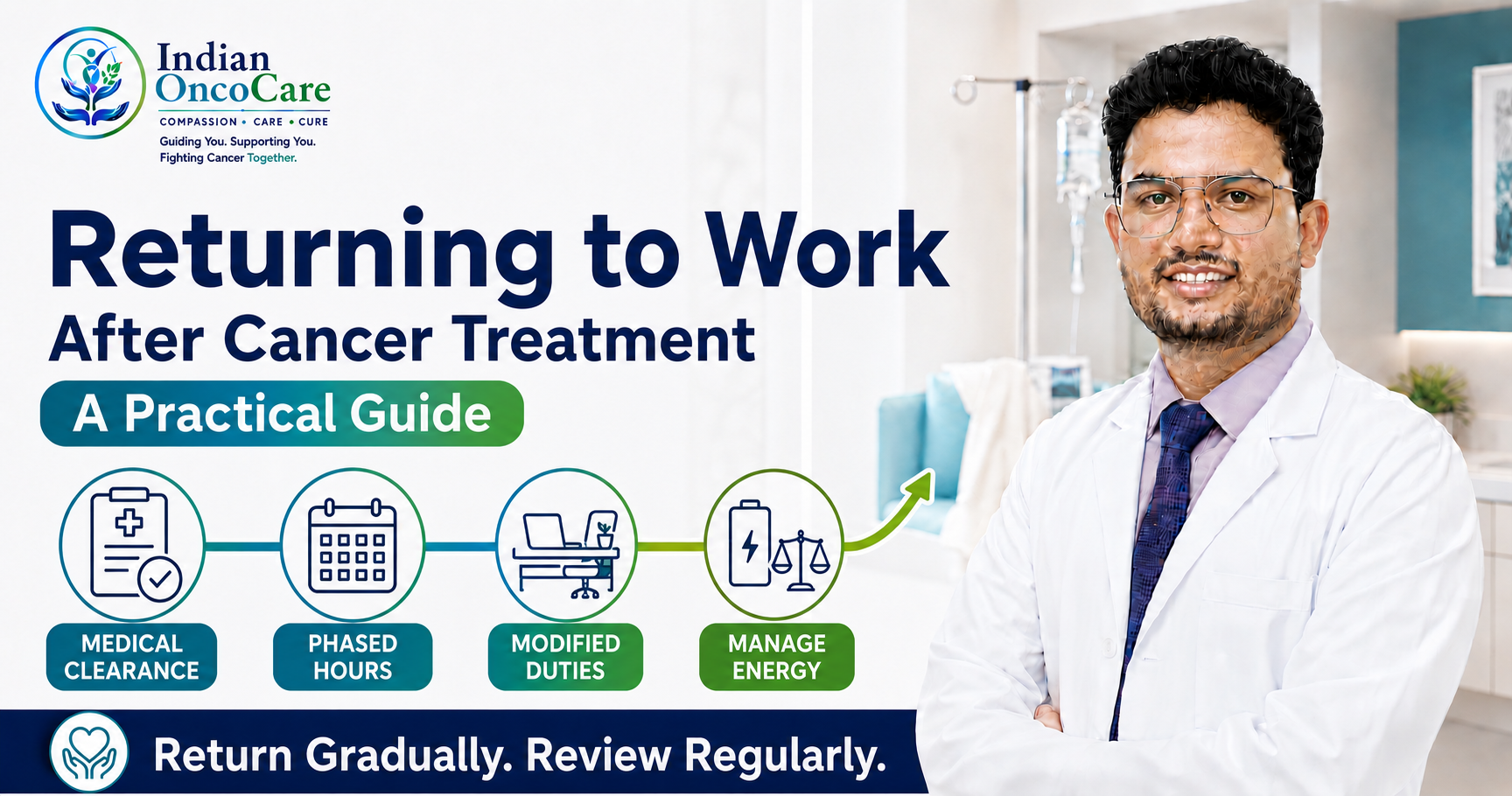
Returning to work after cancer treatment is a milestone many people look forward to — a sign of life moving forward. But it can also be daunting: fatigue, uncertainty, and questions about what and how much to tell colleagues. Here is a practical guide.
There is no single right timeline
Some people return to work during treatment; others need months afterward. It depends on your job, your treatment, and how you feel. There is no “correct” timeline, and comparing yourself to others is rarely helpful. A phased or part-time return is often easier than jumping straight back to full hours.
Managing fatigue and expectations
Cancer-related fatigue is real and can persist after treatment ends. Plan for it: ease back gradually, prioritise tasks, build in rest, and be honest with yourself about capacity. Your energy will usually improve over time, but pushing too hard too soon can set you back.
Returning to work after cancer is not a test of how quickly you can be ‘back to normal.’ A slower, phased return that lasts is worth far more than a fast one that collapses.
What to tell your employer
How much to disclose is your choice. Many people find a conversation about practical adjustments — flexible hours, a phased return, lighter duties initially — more useful than sharing full medical detail. Keep a copy of your treatment summary and follow-up schedule for planning. Our guide on life after cancer covers the wider survivorship picture, and our patient support, patient resources and financial guidance pages can help. A second opinion on your follow-up plan is always reasonable.
Frequently asked questions
When should I return to work?
There is no fixed timeline — it depends on your job, treatment and how you feel. A phased return often helps.
Do I have to tell my employer I had cancer?
That is your choice. Many focus on practical adjustments rather than sharing full medical detail.
Will fatigue affect my work?
It can, and it may persist a while. Easing back gradually and prioritising rest helps.
What if I can’t manage full hours at first?
A phased or part-time return is common and often more sustainable.
Related reading: Life After Cancer · Patient Support · Financial Guidance · Patient Resources · Second Opinion for Cancer
Reviewed by Dr. Harish Kancharla
DM (Medical Oncology), AIIMS, New Delhi · MD (Internal Medicine), PGIMER, Chandigarh
Senior Consultant – Medical Oncology & Hemato-Oncology, Yashoda Hospitals, Somajiguda, Hyderabad
Telangana State Medical Council Registration No. 77186
Last reviewed: August 2026
This article is general information, not personal medical advice. Cancer decisions depend on your individual diagnosis, stage, test results and overall health. Please see our Medical Disclaimer.